
Birdwatching in Scotland: Best Places & Seasons
Birdwatching in Scotland: where to see puffins, gannets and eagles. The best places and seasons to go & easy tips for better photos.
NATURE & WILDLIFESCOTLAND TRAVEL GUIDESPHOTOGRAPHY
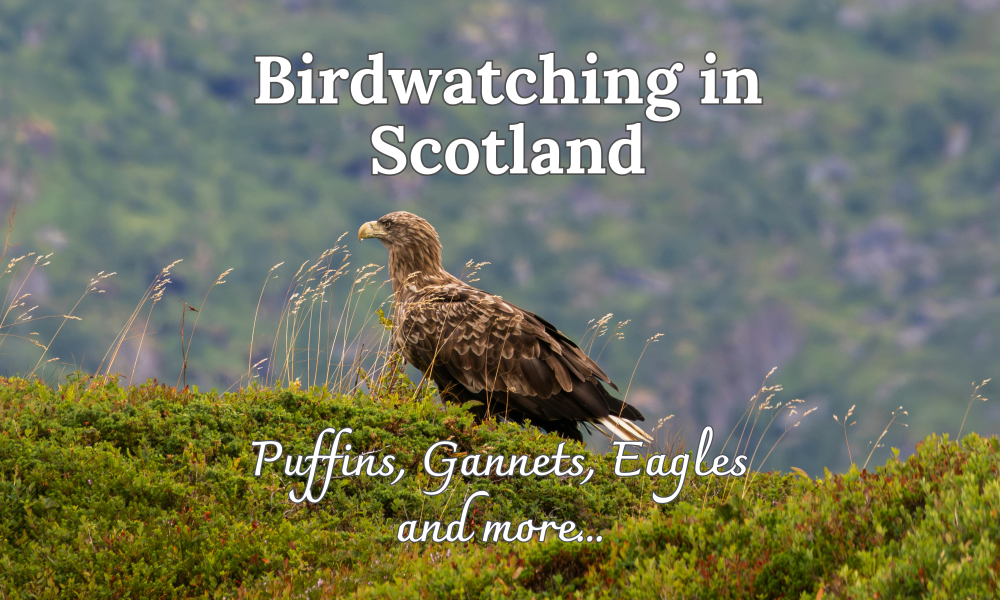
If you’ve ever searched for birdwatching tips in Scotland and found yourself wading through the same tired advice (“bring binoculars”, cheers mate), this one’s for you.
Because Scotland isn’t just castles, whisky, and weather that can’t commit, it’s a full-blown bird buffet: cliffside “seabird cities” yelling into the wind, eagles cruising overhead like they’ve got the deeds, and winter wetlands so busy with swans and geese it looks like someone hit copy–paste on nature.
If you’re brand new to birdwatching, don’t panic. You don’t need to know Latin names, own a scope the size of a small submarine, or wear a hat that makes you look like you’re about to annex a neighbouring country. You need three things: patience, layers, and the self-control not to stroll up to a nesting bird like you’re asking it for directions to the nearest Greggs.
This guide will walk you through the birds you’re most likely to see, the best Scottish places to find them, and practical tips for spotting and photographing them, without ruining the moment for you or the wildlife.
Why Scotland is ridiculously good for birdwatching
For a “small” country, Scotland is packed with variety: mountains, ancient pinewoods, lochs, estuaries, moorland, and enough coastline to make your car develop a personal vendetta against single-track roads. That mix of habitats means you can go from seabirds to forest specialists to raptors in the same trip—often with a fish supper in between (highly recommended, just watch out for the gulls).
The other big reason Scotland delivers? Access. Huge chunks of the country are protected, responsibly managed, and set up for wildlife watching, with visitor-friendly reserves and boat trips that let you enjoy the show without needing survival training. A cracking example is NatureScot’s Isle of May National Nature Reserve, where spring and early summer feel like you’ve stepped into a documentary… except you’re the one getting dive-bombed by terns for having the audacity to exist.
When to go: the best time of year, without the waffle
Scotland does seasons with gusto. Pick the right time and you’ll have those “OH MY GOD IT’S RIGHT THERE” moments on repeat.
Spring into early summer (April–July) is the sweet spot for seabirds. Puffins return to their burrows, cliffs fill with guillemots and razorbills, and the air becomes a constant chorus of “mine mine mine” (seabird edition). Late spring and early summer are also brilliant on the Isle of May, when the island is busy, loud, and unapologetically alive.
Late February to October is your broad window for gannets at the big colonies, with the best boat trip experiences typically landing in spring/summer and tailing into early autumn. If you like your wildlife with a sea breeze and a bit of drama, the Scottish Seabird Centre’s boat trips from North Berwick are hard to beat.
April to August is your main season for ospreys, summer visitors who arrive with the energy of someone who’s just spotted a buffet and intends to take full advantage.
Year-round works for the big eagles on the west coast, but late spring through summer often gives you the best chance of longer views and more activity.
October to March is when wetlands steal the show. Swans arrive, geese pack the skies, and the landscape turns into a living snowglobe, minus the cosy indoor part.
The birds you’re most likely to see (and become obsessed by)
The seabird crowd-pleasers
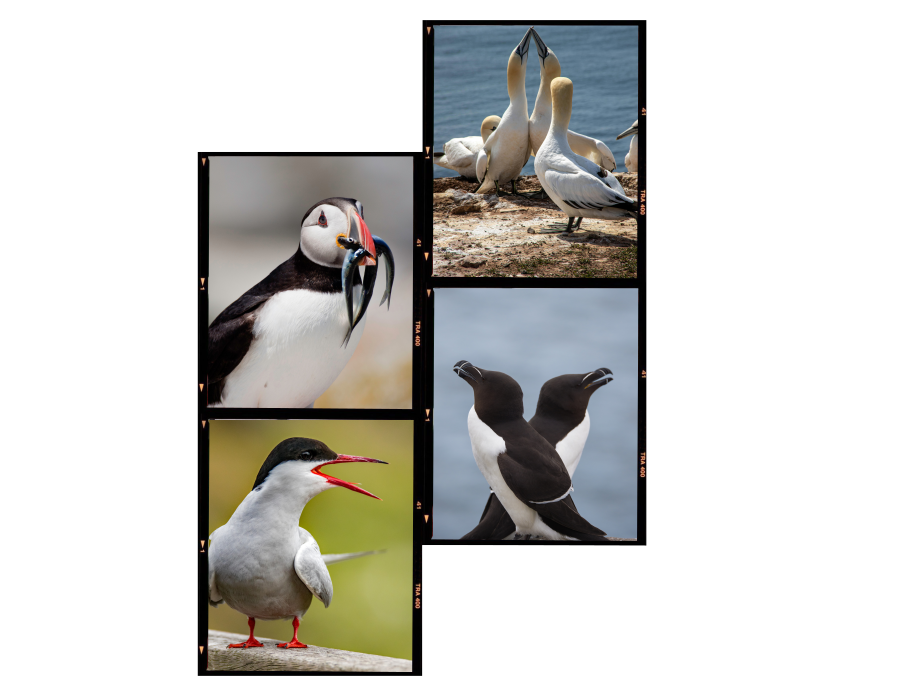
Scotland’s seabirds are the gateway drug. You’ll start out thinking, “Oh cute, a puffin,” and end up arguing with strangers about whether that’s a guillemot or a razorbill like it matters more than mortgage rates.
Expect:
Puffins (tiny, colourful, and somehow always slightly surprised)
Gannets (white missiles that dive like they’re trying to punch the sea)
Guillemots and razorbills (the tuxedo brigade)
Kittiwakes, shags, fulmars, terns (loud, dramatic, and very photogenic)
Raptors: Scotland’s airborne royalty
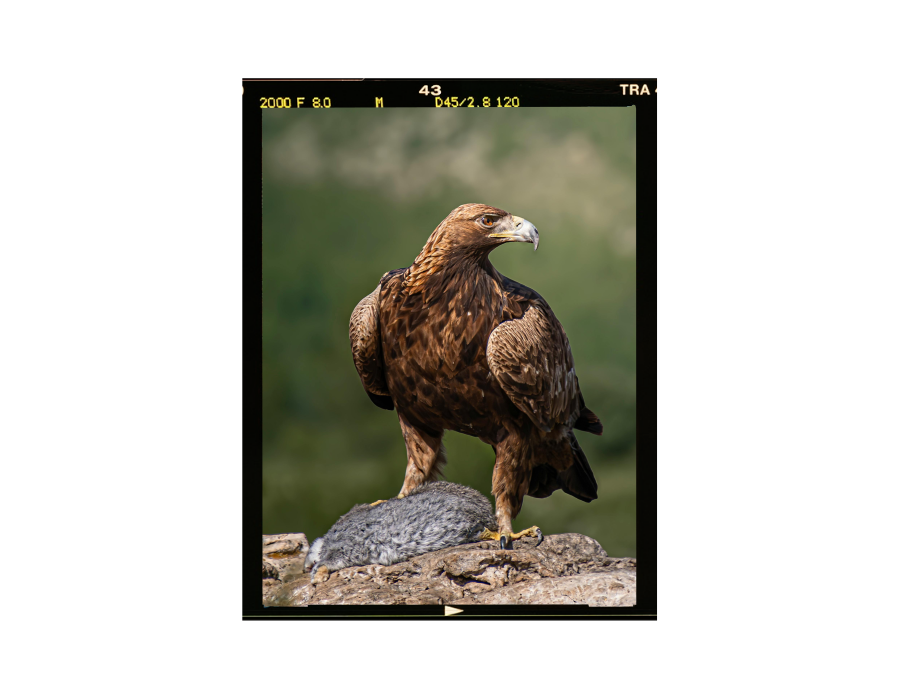
Once you’ve seen a white-tailed eagle properly, with big, slow wingbeats and an effortless presence, it’s hard to go back to normal life. Golden eagles feel like the Highlands made a bird. Ospreys look like they’re permanently on a mission.
Depending on where you go (and how patient you are), you might see:
White-tailed eagles
Golden eagles
Ospreys
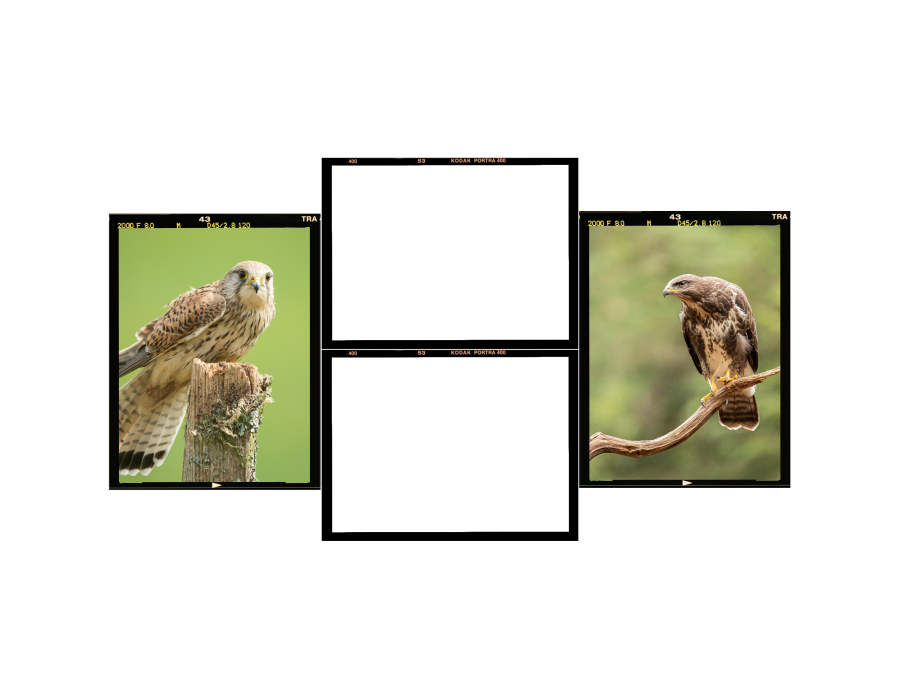
Buzzards and kestrels
Hen harriers (in the right places, and always worth the effort)
Winter wetlands: the “how are there this many?” season
Winter in Scotland is underrated for birding. You swap puffins for vast, moving flocks:
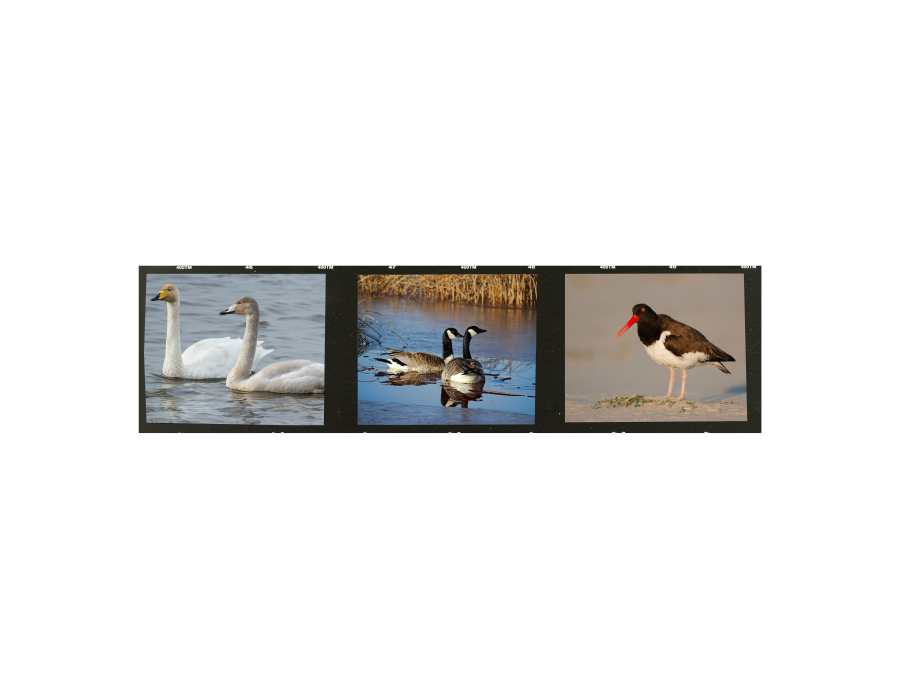
Whooper swans (elegant, loud, and deeply unimpressed by you)
Geese in numbers that feel frankly unfair
Ducks everywhere you look
Waders along coasts and estuaries if you time the tide right
Where to go: Scotland’s best birding regions, without the faff
I’m going to take you around Scotland like we’re road-tripping together—except I’m the one gently steering you away from bogs, cliff edges, and that “shortcut” that is absolutely not a shortcut.
The East Coast: seabird chaos with easy access
If you want big wildlife moments without trekking for hours, the East Coast is a gift.
Start around North Berwick. A wildlife boat trip is the kind of day that makes even non-birders go quiet and start pointing like Victorian explorers. The Scottish Seabird Centre’s trips give you cracking chances at gannets, a supporting cast of seabirds, and often seals too—because Scotland always adds a bonus.
Then there’s the Isle of May. It’s not subtle. In spring and early summer, it becomes a full-volume seabird metropolis with puffins, terns and all the cliffside drama you could ask for. Planning info and visitor guidance live on NatureScot’s Isle of May page, which is worth checking before you go so you know what’s open, when boats run, and what the rules are (spoiler: the birds are in charge).
For a mainland option with “how is this free?” energy, head to St Abb’s Head in the Scottish Borders. It’s one of the most accessible cliff spectacles in the country, and during peak nesting season, you’ll take approximately 400 photos and still feel like you missed something.
North-East Scotland: gannets on the mainland (yes, really)
If you want gannets without needing a boat, the north-east has you covered.
RSPB Troup Head is the headline act: towering cliffs, loads of seabirds in season, and the sort of views that make you forget your phone exists (briefly, anyway). Then there’s RSPB Fowlsheugh near Stonehaven, a classic cliff-top reserve where peak season turns the coastline into a living, screaming mural.
The Highlands and Cairngorms: ospreys, forests, and “I heard it, but I can’t see it”
If seabirds are the easy win, the Highlands are where you level up.
RSPB Loch Garten is one of the best places to start. It’s friendly, well set up, and it sits in prime woodland habitat, precisely the kind of place where you can have a great day even if you don’t know a siskin from a sandwich.
If you head higher into the Cairngorms, you enter sensitive ground-nesting territory. It can be spectacular in late spring and early summer, but the “rules” are simple: keep to sensible routes, give birds space, and don’t treat it like a scavenger hunt for nests. That’s not birdwatching, that’s being a nuisance with boots.
West Coast and Islands: big eagles and bigger scenery
The West Coast is where Scotland goes full cinematic.
Mull is one of the best bets for seeing white-tailed eagles, and if you’re lucky, you’ll also get otters, dolphins, or a seal doing that thing where it pops up like it’s checking your itinerary. Practical background info on these absolute units (and responsible viewing projects) is well explained by Forestry and Land Scotland.
Islay is a different kind of magic, particularly in the colder months, when the island becomes famous for wintering geese and the soundtrack of honking lives in your brain forever. For a solid base with good access, RSPB Loch Gruinart is a great shout.
North-West: wild islands and puffin energy
If you want a proper seabird day out—boat crossing, trails, cliffs, and a feeling that you’re very far from emails—Handa is a belter. The Scottish Wildlife Trust’s Handa Island reserve is one of those places where you’ll forget you’re meant to be “doing” anything other than standing still, grinning, and whispering “look at that” every thirty seconds.
Southwest and winter wetlands: swans, geese, and a flask-worthy spectacle
When winter hits, Scotland’s wetlands absolutely show off.
WWT Caerlaverock is a classic: excellent viewing, proper facilities, and winter scenes that feel like wildlife theatre. If you’re up in the north-east, RSPB Loch of Strathbeg is another heavy-hitter, especially for big winter flocks.

How to spot birds without missing everything
Here’s the secret: the best birdwatchers don’t “look harder”, they move less!
Go early or late for the best light and the most activity. Use your ears first: birds usually give themselves away before they show themselves. And when you stop stomping around, wildlife relaxes and does what it does naturally, right in front of you.
Also, learn a few basic silhouettes. Once you can tell “gannet vs gull” and “eagle vs buzzard,” you’ll feel like you’ve unlocked a cheat code.
Photography tips: how to get the shot (and keep it ethical)
Let’s be honest: most bird photos fail for two reasons - distance and movement.
A few things that help immediately:
Shutter speed: birds in flight need it fast. Start high and adjust.
Burst mode: because birds do not pose, ever.
White birds: gannets and swans will blow highlights in bright sun—watch your exposure.
Boats: stabilise yourself first. The camera can only do so much when you’re wobbling like a newborn deer.

And the big one: don’t be a menace. If a bird alarm-calls, repeatedly looks agitated, or flies off, you’re too close; back up. Scotland’s outdoor guidance on enjoying wildlife responsibly is laid out brilliantly in the Scottish Outdoor Access Code advice on avoiding disturbance. Read it once and you’ll already be better than half the people with cameras.
Easy mini-itineraries that don’t require a spreadsheet
A seabird weekend (East Coast)
Base near Edinburgh, do a boat trip from North Berwick, add the Isle of May if it’s running, then finish with a cliff reserve like St Abb’s Head. Minimal driving, maximum “how is there another puffin?”
A west coast “big bird” break
Based on Mull for eagles, add a wildlife cruise if conditions are good, and accept that you’ll also photograph landscapes because Scotland insists you do.
A winter wetland day
Pick Caerlaverock or Strathbeg, bring a flask, and prepare for huge skies full of movement. It’s strangely addictive.
Want a version of this that’s actually planned properly?
If you’d rather not spend your trip negotiating single-track roads and arguing with parking signs, you can browse my private tours, and I’ll handle the logistics while you do the important work (pointing excitedly and taking photos). If you’re self-driving but want a route that makes sense, hits the highlights, with sensible timing, and stops that aren’t just “because Google said so”, my itinerary planning service will sort you out. And if you fancy more Scotland inspiration to stitch into your trip, the Scotland Travel Hub is a dangerously easy rabbit hole to fall down.
Now go. Scotland’s birds are waiting. And they’re judging your jacket choice already.
Get In Touch
info@thescottishtourguide.com
+44 (0)7769691551
© 2025 The Scottish Tour Guide