
The NC500: What’s Actually Worth Stopping For
NC500 must-see stops that are actually worth it, from Achmelvich beach to Smoo Cave and more. Plus, local tips to avoid crowds and drive it right, too.
SCOTLAND TRAVEL GUIDESTRIP PLANNINGROAD TRIPS IN SCOTLAND
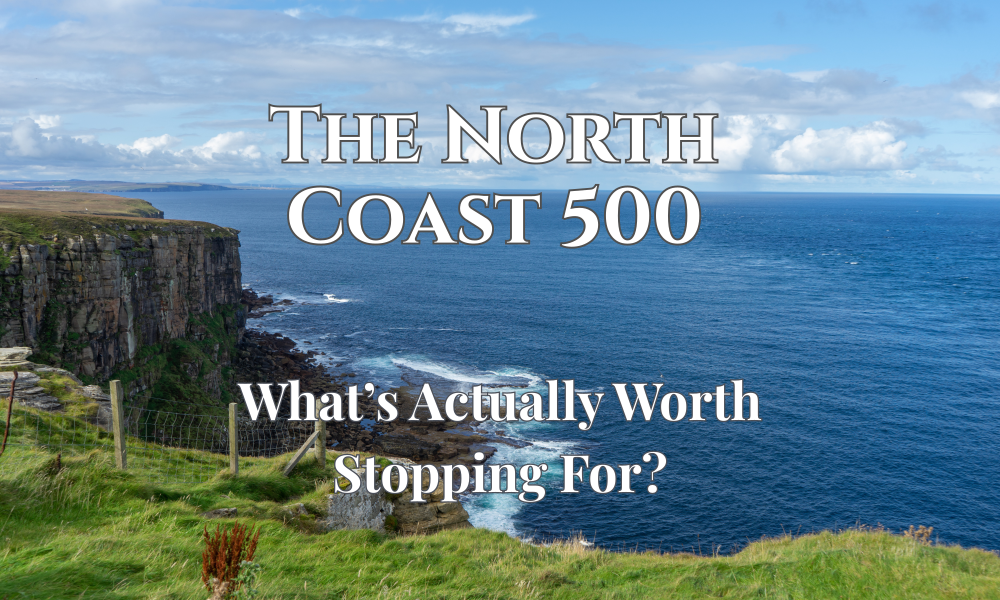
The North Coast 500 has been marketed as “Scotland’s ultimate road trip,” and to be fair… it absolutely can be. But it can also be a 516-mile exercise in stopping every eight minutes because someone in a hire car has spotted a “SCENIC VIEWPOINT” sign and lost all critical thinking.
So here’s the deal: I’m not here to sell you fluff or tell you to “soak up the vibes” (I will not). I’m here to tell you what’s genuinely worth pulling over for, the places that still make locals go, “Aye… that’s pure class.”
And yes, we’re doing the proper standouts: Achmelvich, Smoo Cave, Dunnet Head, and Mellon Udrigle, plus a few extra stops that deserve their place on your camera roll and in your memory, not just on your sat-nav’s list of “nearby attractions.”
Before We Start: A couple of truths that will save your sanity
The NC500 is just over 500 miles (516, to be exact) - do not be under the illusion that you can drive it fast…this is not motorway miles, this is slow, winding, sheep-infested miles. Patience is key.
The West Coast is the main event - The east has lovely stretches, but the west is where Scotland starts showing off.
Book ahead in peak season - This is not a “maybe I should” situation, but more of a “you will be sleeping in your car behind a recycling centre” level of critical. VisitScotland literally begs people to plan and book accommodation in advance for the route.
Drive like a guest, not a conqueror - Single-track etiquette isn’t optional, and neither is basic respect for communities that actually live here. If you need a refresher, the Scottish Outdoor Access Code is the grown-up version of “don’t be a nuisance.”
Right. Now the fun bit.
The West Coast Winners (where the NC500 earns its reputation)
If the NC500 were a movie, the west coast is the part where the soundtrack swells, and everyone pretends they’re in a cinematic montage. Start taking your time around Ullapool and north/west of it; this is where the “worth stopping for” ratio shoots up dramatically.
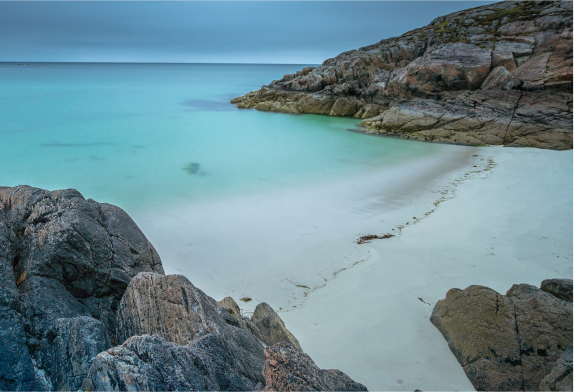
Achmelvich Beach: the “this can’t be Scotland” moment.
Achmelvich is the beach that makes visitors go weirdly quiet. White sand, water that looks imported, and scenery that feels like it’s been dialled up past reasonable settings.
It’s also not just hype, Achmelvich Bay has been recognised in Scotland’s seaside awards lists (so yes, it’s not just pretty; it’s well-regarded for the whole “being a proper beach” thing). Highland Council
How to do Achmelvich properly (not just a two-minute dash):
Walk a bit. Even 20 minutes along the shoreline changes the whole feel.
Pack something warm, even in summer. The view says “Mediterranean.” The breeze says, “Don’t be ridiculous.”
If you’ve got time, pair it with nearby west coast scenery rather than immediately racing back to the main road.
And if you want a bonus stop nearby that’s actually worth it…
Quick detour bonus: Clashnessie Falls (the “oh hello” waterfall)
Not on your original list, but it’s the kind of stop that gives you a big reward for minimal effort. If you’re doing Achmelvich/Lochinver, it’s a cracking add-on.
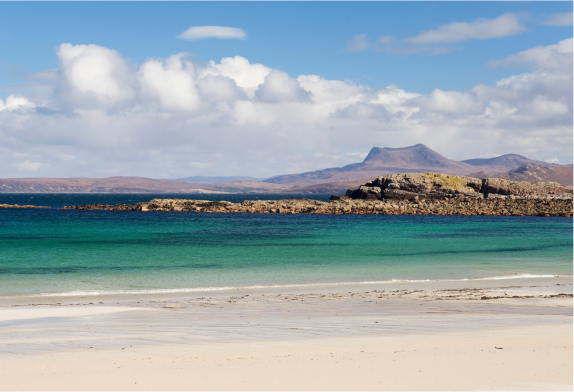
Mellon Udrigle: the beach that ruins other beaches
Mellon Udrigle isn’t flashy on the map. It doesn’t scream for attention. It just sits there quietly being absurdly beautiful — pale sand, turquoise shallows, and mountains lined up behind it like they’re posing for a postcard.
It’s also one of those stops that rewards you for slowing down. Not “jump out, photo, leave.” More like “sit down, breathe, wonder if your email inbox is even real.”
Local-style tips for Mellon Udrigle:
Go when the tide’s out if you can — more sand, more drama.
If the weather’s moody (common), don’t sulk. This place looks ridiculous under storm light.
Bring snacks. Not because there’s nothing around (there’s plenty along the route), but because you’ll want to stay longer than planned.
The Far North Stars (where it gets wild, airy, and properly coastal)
The far north can feel remote in the best possible way: big skies, cliffs, and the sense that you’ve driven to the edge of something.
Smoo Cave: the rare attraction that actually delivers
Some “must-see” stops are basically a sign and a puddle. Smoo Cave is not that.
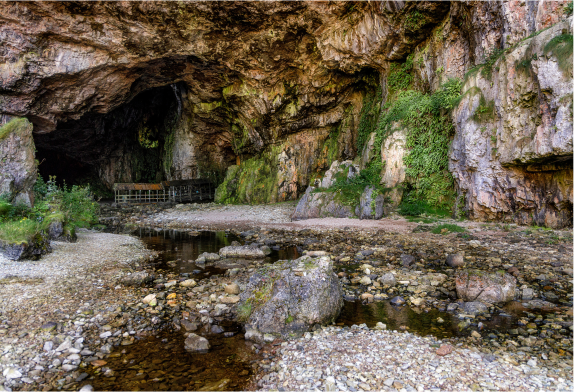
It’s a dramatic sea cave set into limestone cliffs near Durness, and you can explore it on foot, and sometimes by boat when conditions allow. VisitScotland notes it’s floodlit inside, has one of the largest sea-cave entrances in Britain (about 50 ft high), and was formed by both a burn (stream) and the sea. VisitScotland
There’s something deeply satisfying about a place that looks impressive in photos and in real life.
Do Smoo Cave like you’ve got sense:
Walk down to the main chamber, then keep going for the waterfall/lake chamber area — that’s where it gets properly atmospheric.
If the boat tours are running, they’re a great way to get deeper in (and the guides tend to be brilliant). Smoo Cave Tours+1
After heavy rain, it’s extra dramatic. After very heavy rain, it can be a reminder that nature is in charge.
Dunnet Head: the real “most northerly” mic drop
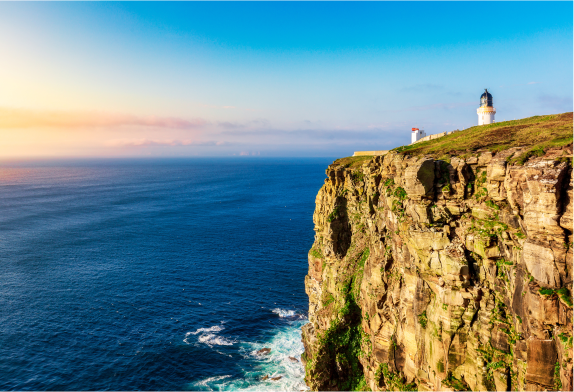
Let’s clear this up: people flock to John o’ Groats because it’s famous. But Dunnet Head is the most northerly point of mainland Britain, and it’s one of the best “big cliff” moments on the whole loop.
It’s an RSPB nature reserve, and it’s a proper seabird sanctuary: puffins, guillemots, razorbills, fulmars, kittiwakes… basically a flying documentary.
Why Dunnet Head is the smarter stop:
Bigger views, fewer gimmicks.
Wild cliffs and proper walking without it feeling like a theme park.
On a clear day, you can see across to Orkney (and feel wildly smug about it).
If you’re a photographer (or just someone who likes returning home with evidence you actually went somewhere), this is a goldmine for moody coastal shots.
But what about the rest of the route?
Aye, alright, you’ve got a point. The NC500 isn’t just four stops and a dramatic gaze into the distance.
Here are a few extra NC500 moments that genuinely earn their keep (without turning this into a soul-sucking listicle).
Kylesku Bridge viewpoint: the “pull in for five minutes, stay for twenty” stop
It’s one of those places where the road design accidentally creates a perfect viewpoint. The curves, the water, the surrounding hills, it’s ridiculously photogenic.
Duncansby Stacks: the best “near John o’ Groats” payoff
If you’re already up there, this is the stop that makes the far north feel properly epic. Sea stacks, cliffs, and the kind of wind that rearranges your personality.
Castle Sinclair Girnigoe (East Coast drama)
If you like your ruins with a side of sea spray and gothic energy, this one hits the spot. (And yes, the East Coast has its moments, it’s just not quite as consistently jaw-dropping as the West.)
How long do you actually need for the NC500?
You can do it in 3–4 days, but it’ll feel like an endurance event with nice scenery.
A better rule of thumb:
5–7 days: comfortable, enjoyable, less rushed
7–10 days: ideal if you want hikes, beach time, slower mornings, and fewer “we’ll eat later” lies
VisitScotland’s advice about planning ahead isn’t just for politeness; it’s practical, especially in busy months.
Food, fuel, and the boring stuff that can absolutely ruin your day if you ignore it
You don’t need me to tell you to bring a jacket. But you do need a wee reality check on logistics:
Fuel: Don’t run it to fumes “because the next village will have a petrol station.” Sometimes it won’t. Fill up when you can.
Food: Some places have limited opening hours (especially outwith peak season). If you find a good café open, don’t overthink it, feed yourself.
Toilets: Plan around the bigger stops/towns when you can. Smoo Cave, for example, has public facilities at the site.
This is the Highlands. It’s stunning. It is not a shopping destination.
If you want the NC500 experience without the planning headache
If you’re reading this thinking, “This sounds incredible but I do not want to spend six weeks building a spreadsheet,” you’ve got options.
If you want a tailored route (including where to stay, what to skip, and what’s actually worth the detour), my Bespoke Tour Planning Service exists for exactly that.
If you’d rather have someone else do the driving while you enjoy the views like a relaxed human, have a look at my 6 Day NC500 Private Tour.
And if you’re still figuring out how to fit Scotland into your time, my local-planned itinerary guide for 3, 5, and 7 days will help you stop trying to teleport between places.
The bottom line: the NC500 is only “worth it” if you stop for the right things
The NC500 isn’t a checklist. It’s not a badge of honour. It’s a loop through some of the most outrageous coastal scenery in Europe, if you give it the time and pick your stops wisely.
So if you do nothing else, make sure you hit:
Achmelvich for the beach that looks fake
Mellon Udrigle for the quiet, jaw-dropping west coast magic
Smoo Cave for proper, dramatic geology (and a cave that actually shows up)
Dunnet Head for the true northern cliff-top mic drop — and the seabirds doing their thing
And if you want the official overview of the route (for maps, listings, and the basics), the NC500’s official site and VisitScotland’s route page are handy references.
Get In Touch
info@thescottishtourguide.com
+44 (0)7769691551
© 2025 The Scottish Tour Guide