
Scotland Without the Crowds
Hate crowds? Discover quiet routes, empty islands and calm cities in Scotland, with insider tips on when and where to go for space, silence and sanity.
FIRST-TIME VISITOR GUIDESCOTLAND TRAVEL GUIDESTRIP PLANNING
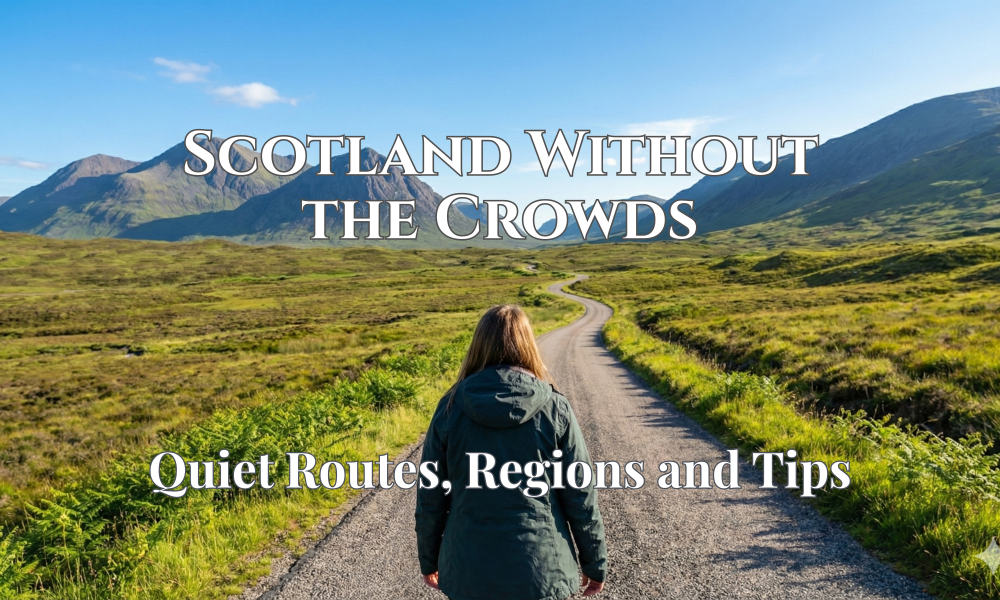
There are two ways to experience Scotland.
One involves queues, coach parks, and standing politely behind someone livestreaming a rock. The other involves space, silence, and the unsettling but delightful feeling that you might have the place to yourself.
If you’re planning a trip to Scotland and the idea of crowds makes your eye twitch, this guide is for you. Scotland isn’t overcrowded, it’s just often visited at exactly the wrong time, in exactly the wrong way, by people who’ve all read the same checklist after googling " Scotland itinerary"
Let’s fix that.
Why Scotland Feels Busy (and Why It Really Isn’t)
Most visitors encounter Scotland between mid-morning and late afternoon, on the same main routes, stopping at the same “unmissable” locations. That’s not bad luck, that’s choreography.
Scotland feels busy when:
everyone arrives at once
everyone stops at the same signed viewpoints
everyone leaves at the same time
Change when you travel, and suddenly you’re visiting Scotland without the crowds, often without going anywhere new at all.
Understanding timing is one of the most overlooked parts of Scotland travel planning, yet it has more impact than almost any destination choice.
The Best Time to Avoid Crowds in Scotland
If you only remember one thing, make it this: timing beats location every time.
Early mornings in Scotland are quiet, misty, and faintly smug. Famous places feel almost personal before 9am. Roads are empty, car parks are deserted, and even the most photographed landscapes stop performing and just exist.
Evenings are just as effective. Long daylight hours mean you can explore well after dinner, when most people have retreated indoors to upload photos and argue about filters.
Seasonally, the quietest time to visit Scotland is late autumn, winter, and early spring. The scenery doesn’t switch off; it just loses the audience. Winter in particular is dramatically underrated if your goal is to avoid crowds in Scotland rather than chase blue skies.
Argyll and the West Coast: Quiet Scotland in Plain Sight
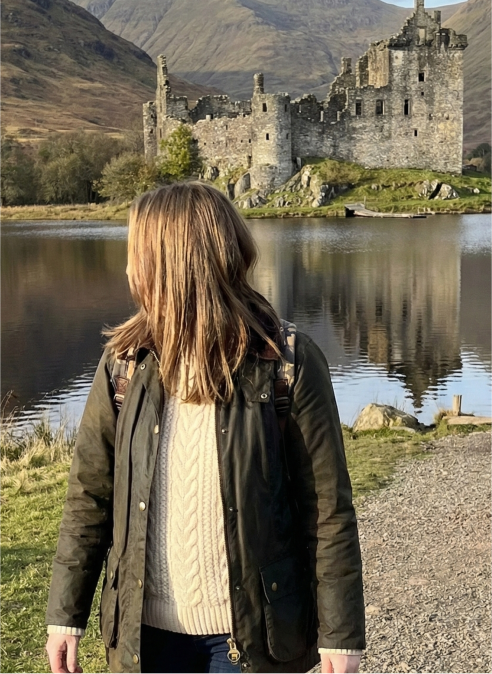
While most visitors sprint north, Argyll sits patiently on the west coast, being beautiful without making a fuss. This region is one of the most reliable quiet places in Scotland, mainly because it doesn’t shout about itself.
Drive west from Loch Lomond instead of north, and the transformation is immediate. Traffic thins. Villages shrink. Sea lochs replace tour buses. Roads wind rather than rush.
Around Loch Sunart, the pace drops to something approaching civilised. You’ll find empty beaches, wildlife getting on with its day, and viewpoints with no signs explaining where to stand. It’s an ideal region for travellers who want peaceful places in Scotland without sacrificing scenery.
This is Scotland with the volume turned down, and it suits it.
Quiet Areas of the Scottish Highlands Most Visitors Miss
The Scottish Highlands are vast. Impressively so. Yet visitors somehow manage to compress themselves into the same sliver of road like there’s a sale on mountains.
Once you step away from the busiest routes, the Highlands open up dramatically. Exploring the less busy parts of the Highlands, inland Perthshire, remote corners of Sutherland, or back roads threading through long glens, reveals a very different experience.
Here, driving slows naturally. Stops are chosen because something looks interesting, not because a guidebook insists. You’ll still see lochs, peaks, and wildlife, but you’ll see them in silence.
These quiet areas of the Scottish Highlands aren’t secret. They’re just ignored by anyone in a hurry.
The Isle of Skye Without the Crowds (Yes, Really)
It is possible to experience the Isle of Skye without the crowds; you just have to stop orbiting the same northern hotspots like it’s a compulsory pilgrimage.
Head south instead, where the island softens and slows. Around Elgol, the road narrows, the views widen, and the Cuillin mountains suddenly feel close enough to touch. Boats come and go quietly, walkers drift past, and the atmosphere is more contemplative than competitive. Further east, the Sleat peninsula, often called the Garden of Skye, offers woodland walks, empty shorelines, and villages that feel lived-in rather than visited, with Sleat rarely attracting more than those who genuinely want to be there.
Even inland, places like Camasunary reward a bit of effort with long stretches of solitude, dramatic scenery, and the rare pleasure of silence on Skye. These aren’t secret spots; they’re simply bypassed by anyone trying to see everything in one day.
Stay overnight in these quieter areas, start early, and Skye becomes what people imagine it will be when they book it: wild, spacious, and blissfully unbothered by your presence.
Skye isn’t ruined. It’s just overcrowded in very specific places, at very specific times.
Quiet Scottish Islands and the Joy of Effort
If you truly want to escape, look offshore.
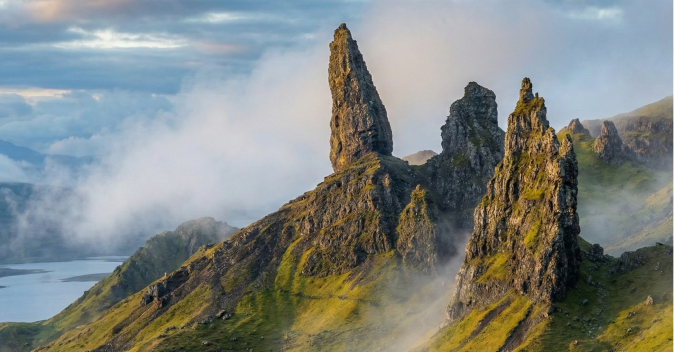
Some of the quietest Scottish islands don’t feature headline attractions or famous viewpoints. What they offer instead is space, physical and mental. Islands like North Uist or Tiree reward patience with empty beaches, slow days, and roads where sheep set the pace.
Getting there takes effort, and that effort is the point. Ferries, limited accommodation, and unpredictable weather quietly filter out anyone who thinks travel should be efficient.
These are less touristy places in Scotland because they require you to slow down, and that’s exactly why they’re so effective.
Finding Edinburgh Without the Crowds
It’s entirely possible to experience Edinburgh without the crowds — often within a ten-minute walk of the busiest streets.
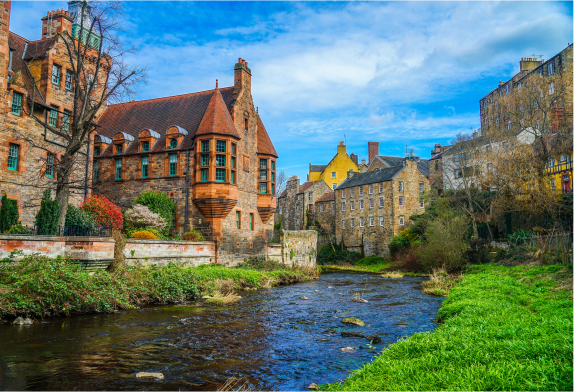
While the Royal Mile absorbs most of the foot traffic, areas just beyond it quickly return to normal life. Wander downhill towards Dean Village, where the city suddenly feels village-like, the Water of Leith burbles past old mill buildings, and the noise drops away to birdsong and the occasional dog walker. It’s a reminder that Edinburgh isn’t a theme park — it’s a place people actually live.
Early mornings here are especially rewarding, before the city fully wakes up and the tour groups arrive. Combine quieter neighbourhoods like this with off-peak timing, and Edinburgh reveals a softer side — one that most visitors never see because they never quite step far enough away from the obvious route.
Why Timing Matters More Than Ticking Boxes
One of the biggest mistakes people make when planning a trip to Scotland is focusing on where to go instead of when to be there.
Crowds aren’t random. They’re predictable. Learn their patterns, and Scotland becomes far calmer, even in popular regions. This approach allows you to avoid crowds in Scotland without chasing obscure destinations or sacrificing the highlights entirely.
It’s not about seeing less. It’s about seeing things when they’re at their best.
Planning a Crowd-Free Scotland Trip (Without the Guesswork)
Avoiding crowds consistently takes judgement, not secret locations.
Many travellers who value space choose to work with a private guide in Scotland, allowing routes, stops, and timings to change in real time. Arriving early, leaving late, or skipping a busy stop altogether makes an enormous difference.
If you’re travelling independently but want help with timing and quieter routes, Scotland itinerary planning can remove the trial-and-error. A custom Scotland itinerary built around realistic distances and calm pacing often turns a stressful plan into a genuinely enjoyable trip.
Scotland for Quiet Travellers
Scotland rewards people who travel thoughtfully. Those who start early, wander slowly, and aren’t afraid to turn off the main road are rewarded with space, silence, and moments that feel almost private.
If you’re seeking quiet places in Scotland, they’re already there, waiting patiently for everyone else to move on.
And if you’d rather skip the homework entirely, I can help you experience Scotland at its calmest, without the crowds and without the stress.
Scotland doesn’t need to be loud to be unforgettable.
Get In Touch
info@thescottishtourguide.com
+44 (0)7769691551
© 2025 The Scottish Tour Guide