
Scottish Borders Hidden Gems: Abbeys, Ruins & Views
Escape the crowds in the Scottish Borders: Melrose, Jedburgh & Dryburgh Abbey, Scott’s View and the Eildon Hills, with a long history and calm vibes.
SCOTLAND TRAVEL GUIDESHIDDEN GEMS IN SCOTLANDROAD TRIPS IN SCOTLAND
There’s a point on a Scotland trip where the noise fades. Not because you’ve gone somewhere dull, but because you’ve gone somewhere that doesn’t feel the need to perform.
The road narrows. The scenery softens. The land rolls instead of rearing up. And suddenly you realise you’ve crossed into the Scottish Borders, a place that looks calm because it has already survived everything.
This is Scotland after the drama. Or perhaps more accurately, Scotland after the drama moved on, leaving behind abbeys, towers, houses and hills that remember exactly what happened here. The Borders don’t shout their history. They let it sit quietly in stone and landscape, waiting for you to notice.
I usually let the story begin around Melrose, because it opens gently… then absolutely does not stay that way.
Melrose Abbey: beauty, bloodshed, and the heart of a hero
Melrose itself is charming in a way that feels almost suspicious. Tidy streets. Polite buildings. The kind of place where you assume history behaved itself.
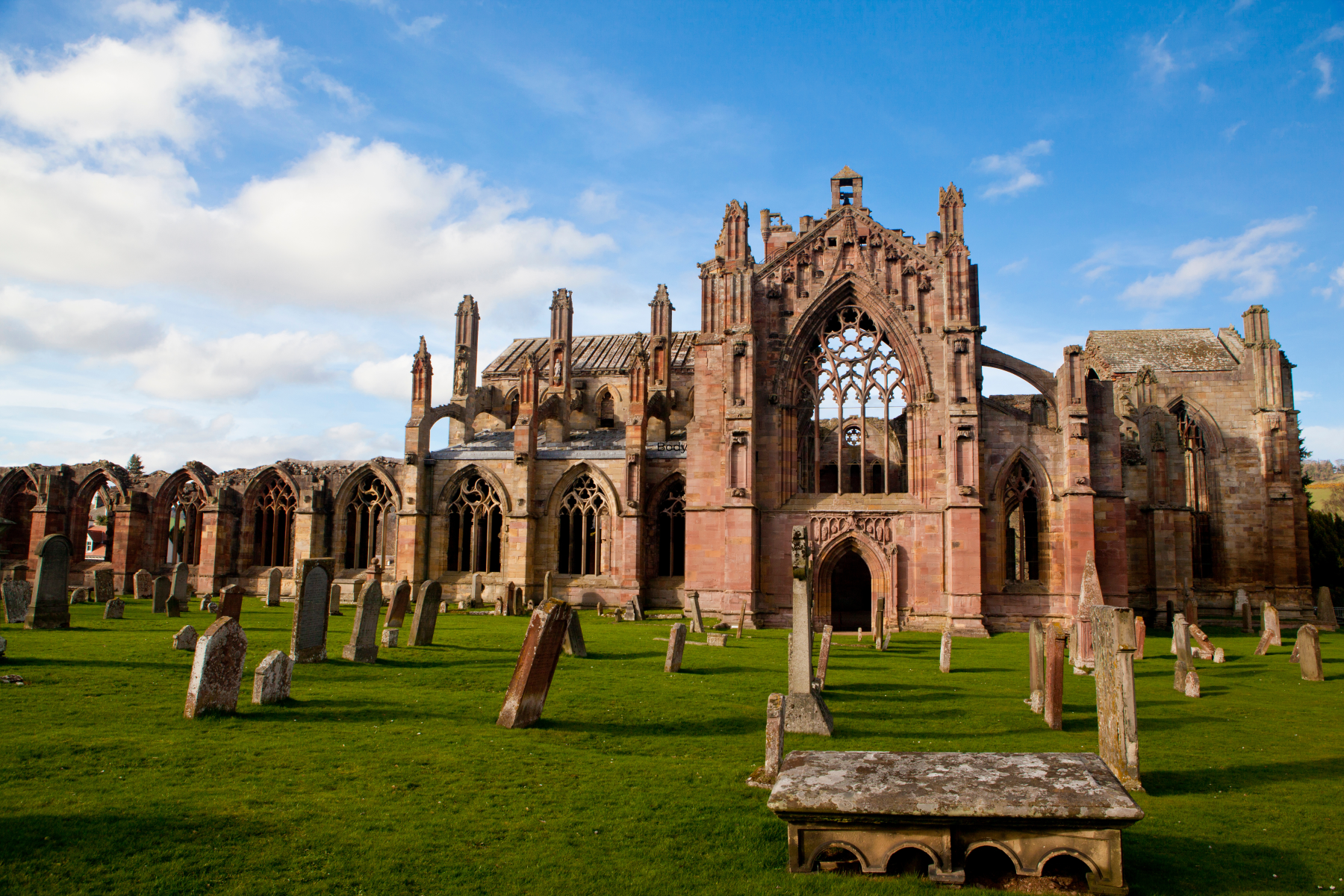
Then you walk into Melrose Abbey, and any sense of restraint vanishes.
Founded in 1136 under King David I, Melrose was Scotland’s first Cistercian monastery, an order supposedly committed to simplicity. Which makes the abbey’s later appearance faintly hilarious. By the late medieval period, it had become a riot of carved stone: saints and sinners, foliage curling where you’d expect bare walls, grotesques peering out as if mid-gossip, and yes, a pig playing the bagpipes, because medieval stonemasons clearly enjoyed a joke.
But Melrose’s real story isn’t just artistic ambition. It’s endurance.
The abbey sat directly in the firing line of the Border wars. Wealthy, symbolic, and impossible to ignore, it was attacked again and again by English armies. Burned. Repaired. Damaged. Rebuilt. Over and over, the stones absorbed violence and carried on.
And then there’s the detail that changes how you stand in the place.
The Eildon Hills: always watching, always judging
As you leave Melrose, the Eildon Hills make sure you don’t forget them. Three smooth peaks, perfectly placed, sitting on the skyline like they’ve been there forever, which, inconveniently, they have.
People have lived with these hills for thousands of years. Built on them. Watched from them. Told stories about them. Long before walking boots and picnic stops, they mattered because height meant advantage and advantage meant survival.
You don’t have to climb them to feel their influence. They anchor the Borders landscape, giving everything else a sense of order. In mist, they look mythical. In sunshine, they look dependable. Either way, they’re doing a lot of heavy lifting for the scenery.
Scott’s View: The Borders doing subtle perfection
The road follows the River Tweed, bends gently, and then the Borders do something almost cinematic.
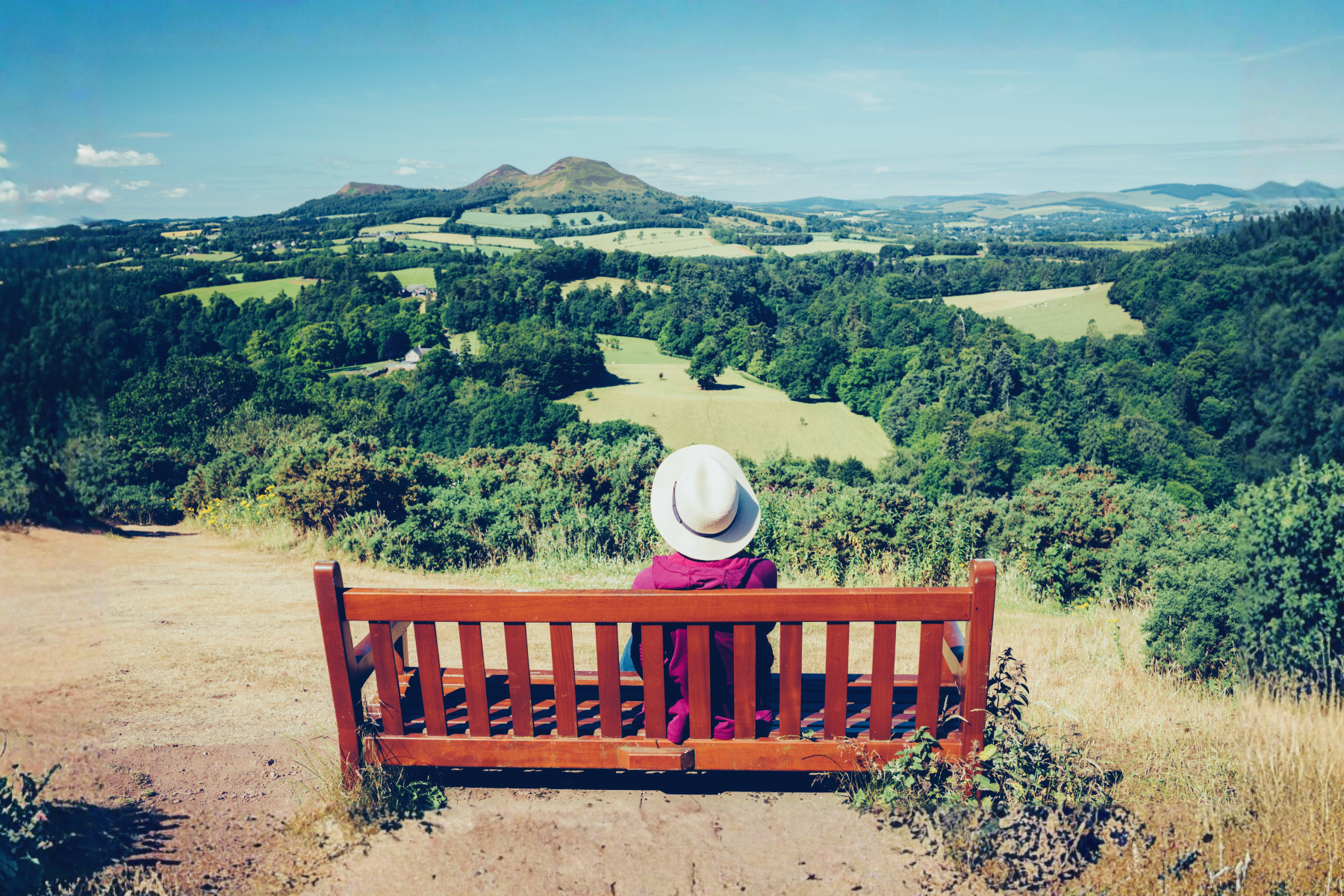
Scott’s View opens out without warning, the river looping below, farmland stretching calmly across the valley, the Eildons sitting exactly where they should on the horizon. It’s not dramatic in a loud way. It’s composed. Balanced. Confident.
Sir Walter Scott adored this view, and standing here, it’s painfully obvious why. This is a landscape that invites reflection rather than adrenaline. You don’t rush. You stop talking. You let your breathing slow to match the water below.
Even here, history layers itself quietly. The loop of land inside the river once held the original Melrose Abbey, long since vanished. The Borders have a habit of doing that, reminding you that what you see is only the latest version.
Abbotsford: when imagination, money, and a love of Scotland collide
Not far from Scott’s View sits Abbotsford House, and this is where the Borders story stops being abstract and starts being unmistakably human.
This wasn’t some inherited ancestral pile. Abbotsford was built by Sir Walter Scott himself, paid for with the profits from his writing, which, in the early 19th century, made him one of the most famous authors in the world. Scott didn’t just write bestselling novels; he more or less invented the historical novel as we know it, then used the proceeds to construct his own ideal version of Scotland in stone.
The house is a masterpiece of controlled chaos. Scott championed what became known as the Scots Baronial style, turrets, battlements, irregular shapes, and deliberate “oldness,” even when the stonework was brand new. He even built fragments from older demolished buildings into Abbotsford, effectively stitching Scotland’s past directly into his walls. Romantic? Absolutely. Subtle? Not remotely.
Inside, Abbotsford feels less like a museum and more like a mind spilled out into rooms. Scott was an enthusiastic collector — weapons, relics, books, curios — and the house reflects that. It’s dense with objects, stories, and the sense that the owner might return at any moment, trailing mud and ideas, ready to hold court.
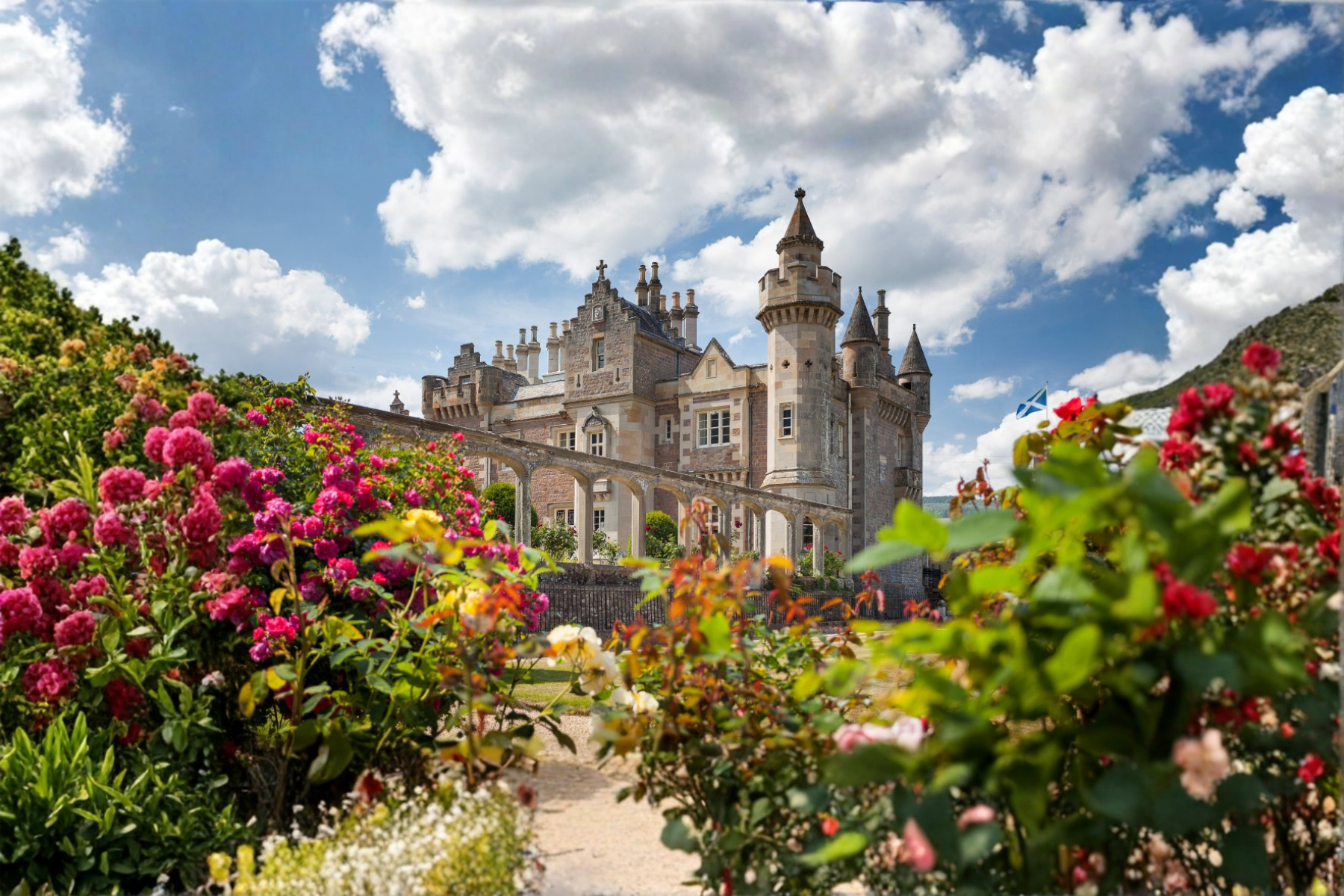
Seen after Scott’s View, Abbotsford feels like the answer to a question you didn’t realise the landscape was asking. You’ve seen what inspired him. Now you’re standing inside what he built in response.
It’s not just a historic house. It’s a character.
Dryburgh Abbey: where the Borders lower their voice
When Robert the Bruce died in 1329, his body was buried at Dunfermline, but his heart was removed, as he had requested, to be taken on crusade. The crusade failed. The heart returned. And tradition holds that it was laid to rest here at Melrose. Nearby words translate roughly as “A noble heart has vanished”, which feels like the Borders quietly twisting the knife, emotionally.
You arrive expecting a pretty ruin. You leave carrying something heavier.
If Melrose is the show-off, Dryburgh Abbey is the one quietly watching from the sidelines.
Dryburgh sits beside the Tweed like it’s deliberately opted out of modern life. The ruins are open, light-filled, and oddly soothing for somewhere that’s been burned more than once. People lower their voices here without being told.
Historically, Dryburgh had a rough time. Founded in the 12th century, it was torched in 1322 by Edward II’s retreating army, then knocked about by later raids and finally undone by the Reformation. By the late 1500s, monastic life was over.
What’s left doesn’t feel bitter. It feels settled. The river flows. Birds argue. Grass grows where cloisters once echoed.
It’s also where Sir Walter Scott is buried, which feels exactly right. After the drama of Abbotsford, his final resting place is modest, quiet, and very Borders. No grand gesture. Just a good spot by the water.
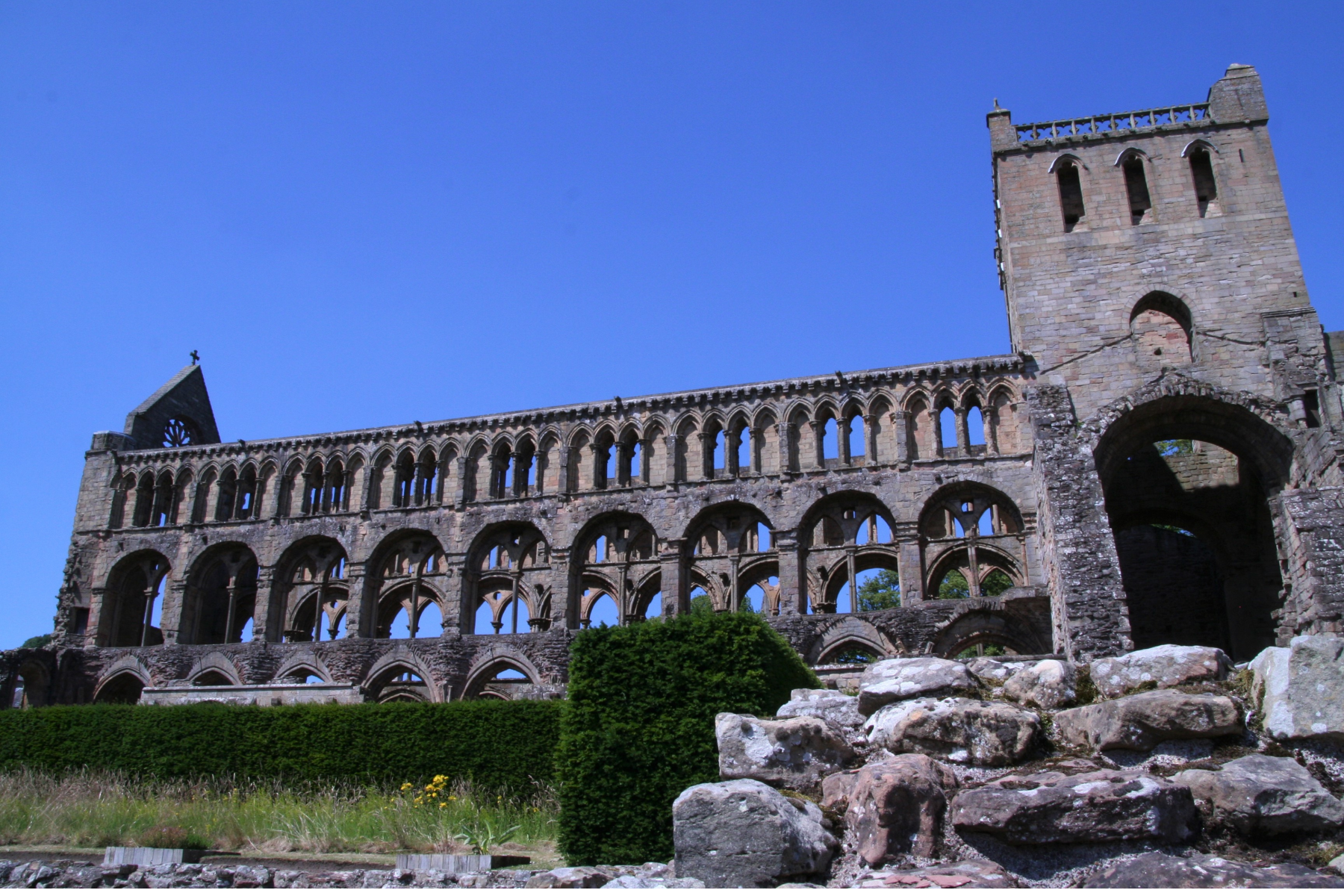
Jedburgh Abbey: the frontier shows its teeth
Then you reach Jedburgh Abbey, and the Borders stop being gentle.
Founded in the 12th century in a town that sat far too close to the English border to ever relax, this was a serious building in a serious place. Thick pillars. Solid arches. Architecture that expected trouble and planned accordingly.
This wasn’t just a religious centre; it was a statement of authority in a region where authority was constantly being tested. And tested it was. Jedburgh Abbey took damage during repeated cross-border conflicts because the Borders never had the luxury of staying out of politics.
Even in ruin, it carries itself like it knows it mattered. You don’t imagine quiet contemplation here. You imagine tension, negotiation, and the constant awareness that the border was never far away.
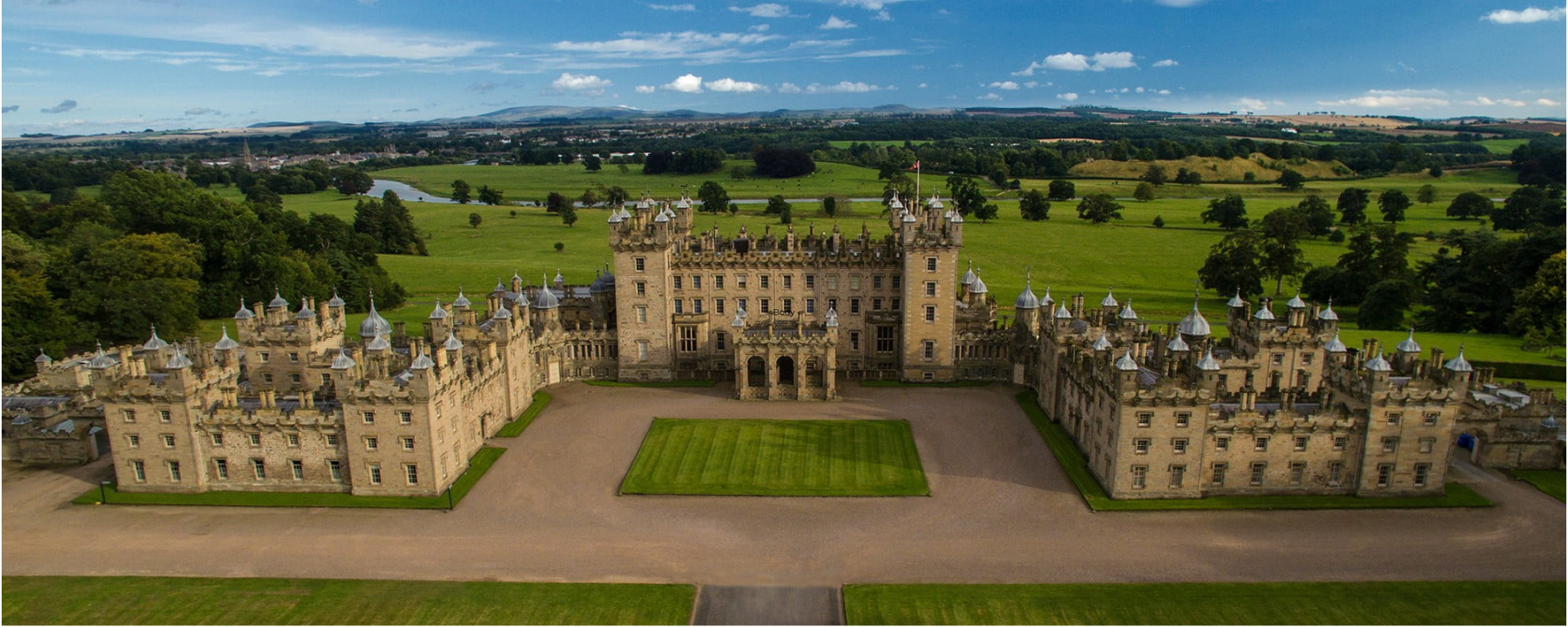
Floors Castle: the Borders decide to carry on
Just when the story feels steeped in broken stone and vanished power, Floors Castle appears and quietly changes the ending.
Floors isn’t a ruin. It’s still lived in. Still evolving. Very much unconcerned with apologising for itself. In fact, it’s the largest inhabited house in Scotland. After abbeys burned, dismantled, and abandoned, Floors feels like Borders deciding that collapse was no longer the plan.
Built and expanded from the early 18th century by the Roxburghe family, Floors reflects a different response to history: continuity instead of rebuilding, land and influence instead of fortification and faith. The architecture speaks of confidence and permanence. Not defence. Not devotion. Endurance.
After a day of ruins, it’s quietly satisfying to end somewhere that’s still standing tall.
Scotland, but calmer (and better for it)
The Borders don’t give you one big wow moment. They give you a story that only makes sense when you’ve taken your time.
Art and endurance at Melrose.
Ancient land at the Eildons.
Perspective at Scott’s View.
Imagination given walls at Abbotsford.
A pause at Dryburgh.
Resolve at Jedburgh.
Continuity at Floors.
If this sounds like your kind of Scotland, unhurried, story-rich, and refreshingly uncrowded, it’s exactly the sort of journey that rewards slowing down. Sometimes the nicest way to experience the Borders is simply to let someone else handle the driving and the timing, while you enjoy the views, the stories, and the moments where everything suddenly makes sense.
And if the Borders are just one chapter in a longer Scottish trip, they slot in best when they’re planned properly, not rushed, not wedged in between busier stops, but given the breathing space they deserve.
Either way, this is Scotland for people who like their history rich, their landscapes honest, and their days out calm enough to actually remember them.
Get In Touch
info@thescottishtourguide.com
+44 (0)7769691551
© 2025 The Scottish Tour Guide