
Where & When to See Snow in Scotland
If you were to draw a map of Scotland marking the exact locations where snow settles with enthusiasm, the Cairngorms would be scribbled over so heavily you’d wear a hole through the page. This is Scotland’s frozen heart; the one place you can almost guarantee winter will show up, move in, and refuse to leave quietly.
The Cairngorm plateau sits at a high elevation and behaves like a giant cold sponge, soaking up Arctic air blasts and clinging onto snow for months at a time. When visitors ask “where to find the most snow in Scotland”, this is always the first answer. Some years, the snow patches survive well into summer, like stubborn ornaments Scotland forgot to put away.
There’s something wonderfully unhinged about Scottish winter. You can wake up to sideways rain, dodge a bit of “fresh breeze” that would knock a cow over, and then, out of nowhere, watch the world transform into a snow globe. Snow in Scotland doesn’t do schedules; it does entrances. Big, bold, breathtaking entrances. And if you’re visiting with dreams of snow-capped mountains, glittering forests, and frozen lochs, it absolutely can deliver all of that… provided you know where to look.
Because let’s be honest: if you’re waiting for snow in Edinburgh or Glasgow, you might grow old waiting. Visitors often ask me, “Does Scotland get snow in winter?” It does. But the real, deep, storybook winter happens in the Highlands, where the mountains gather snow like treasure and keep it long after the cities have returned to their regularly scheduled drizzle.
So let’s wander together, slowly, warmly (metaphorically), and with a good dose of humour, through the places where Scotland hides its winter magic. And by the time we’re finished, you’ll know where to see snow in Scotland, when it snows, and exactly what winter is like in the Scottish Highlands.
Into the Cairngorms: Scotland’s Snow Kingdom
Even the temperatures here feel like they belong in another country entirely. Nearby Braemar famously holds the UK record for the lowest temperature: –27.2°C, recorded not once but three times. If you’ve ever wondered what the inside of a freezer feels like from the freezer’s perspective, visit Braemar in January.
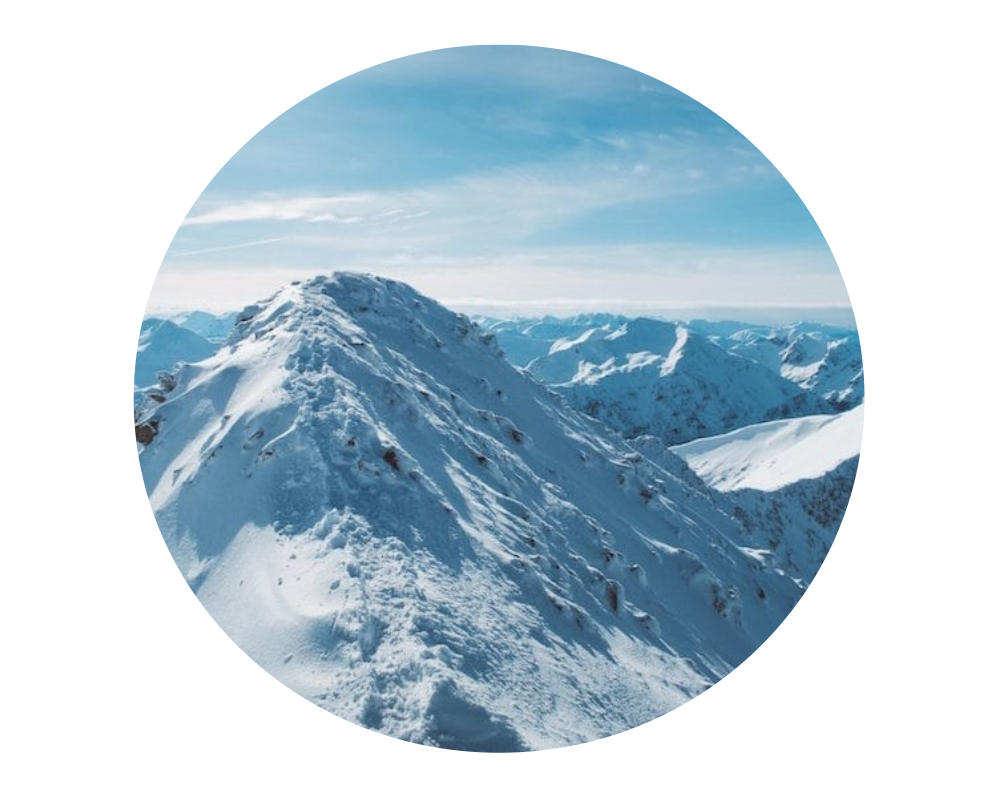
Winter in the Cairngorms feels almost otherworldly. Trees sparkle with frost, lochs glaze over like glass, and the mountains glow pale blue under a thin winter sun that rises late and disappears again before you’ve made peace with the morning. If someone asks, “What is winter like in the Scottish Highlands?”, I always point straight here.
Up on Cairngorm itself, the world opens into something vast, white, and wondrous. The ski area buzzes with life, snowshoers trek across rolling drifts, and wildlife quietly adapts, mountain hares in their white coats, ptarmigan puffed up against the cold, and even the Cairngorm Reindeer Herd looking like they’ve just stepped out of a Christmas card.
You don’t just visit the Cairngorms in winter… You surrender to them.
Glencoe: Where Winter Goes Full Cinematic
If the Cairngorms are Scotland’s snow factory, Glencoe is its epic theatre. It is, without exaggeration, one of the most dramatic winter landscapes in Europe. When travellers ask about the best places for snow in Scotland, Glencoe is always in the conversation, because even a light dusting transforms it into something mythic.
This is the kind of place where even people who “aren’t into landscapes” suddenly become enthusiastic photographers. Snow in Glencoe highlights every fold and crease of the mountains, every cliff face and corrie, every swirling storm cloud sweeping in from Rannoch Moor.
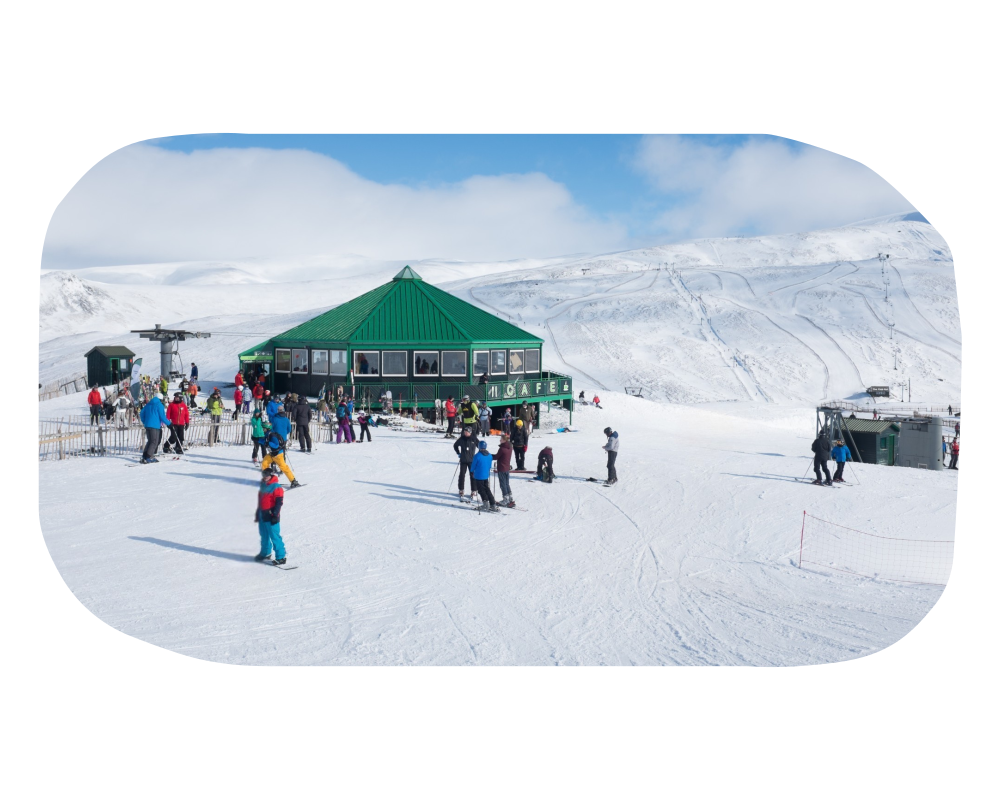
It’s also a superb winter playground. The Glencoe Mountain Resort sits perched high above the glen, offering skiing, snowboarding, and a panoramic café where you can sip hot chocolate while watching snowstorms roll across peaks like theatre curtains.
Glencoe doesn’t just show you winter; it performs winter.
The Nevis Range and Ben Nevis: Scotland’s Icy Giants
Further north, the land gathers height, cold and drama all at once. The Nevis Range, with mighty Ben Nevis towering above Fort William, becomes a deep winter stronghold. If you’re searching online for “snow in Scotland in December” or “what winter is like in the Highlands”, this region appears again and again for good reason.
Snow settles here early and stays late. On the upper slopes of Ben Nevis, snow can cling for nine months of the year. Temperatures plummet. Ice forms thick and fast. And when a storm barrels through the glen, the mountains vanish behind sheets of swirling white before reappearing, gleaming like silver.
For those who don’t fancy scaling the UK’s highest peak in winter (very wise), the Nevis Range gondola is a gift from the weather gods. It sweeps you high up the side of Aonach Mòr, delivering towering views across frozen forests and snowy ridges. On a clear day, the world feels endless; on a stormy day, it feels wild, ancient and utterly captivating.
If you ever wanted to feel small in the best possible way, this is where you stand.
The Lecht & Glenshee: Eastern Scotland’s Snowy Gateways
Glenshee, on the other hand, sprawls across three glens and four mountains, giving it the title of the UK’s largest ski area. When someone searches for “where to see snow in Scotland in January or February,” Glenshee often tops winter condition charts. The drive itself can be stunning, with high snow banks lining the road and distant peaks glowing pink at sunset.
These two regions may not be as dramatic as Glencoe or as extreme as Ben Nevis, but they’re some of the most dependable winter landscapes you’ll find east of the Cairngorm plateau.
Where Snow Rarely Sticks (Let’s Be Truthful)
All this talk of snow might have you imagining Scotland buried in winter bliss… but let’s manage expectations. When people ask me, “Does it snow in Scotland’s cities?” I always answer with a polite: “Sometimes… briefly.”
Glasgow’s mild maritime air turns snowflakes into raindrops before they hit the pavement. Edinburgh gets lovely flurries that melt faster than you can say “Arthur’s Seat.” Inverness, surprisingly, doesn’t get as much snow in town as people expect, though the hills around it can turn icy white.
If you’re intent on guaranteed snowflakes landing on your eyelashes, the Highlands are your playground. Everywhere else is seasonal roulette.
Least likely places to see lasting snow:
Glasgow: rain in various angles
Edinburgh: occasional flurries that melt immediately
Lowland coastal areas: mild air kills snow on arrival
Inverness city: surprisingly inconsistent despite being northern
If you're hoping for guaranteed snow in December or January, keep heading uphill.
What Winter Feels Like in Scotland
Extreme Scottish Winter Facts
(because every good winter story needs a few dramatic stats)
Coldest temperature ever recorded in Scotland (and the UK)
–27.2°C in:
Braemar (1895 & 1982)
Altnaharra (1995)
These places don’t just get cold, they break thermometers.
Snowfall Records
Cairngorm plateau can see 200+ inches (500cm) annually
Snow patches often survive into June and July
The Nevis Range receives some of the strongest winter storms in the UK
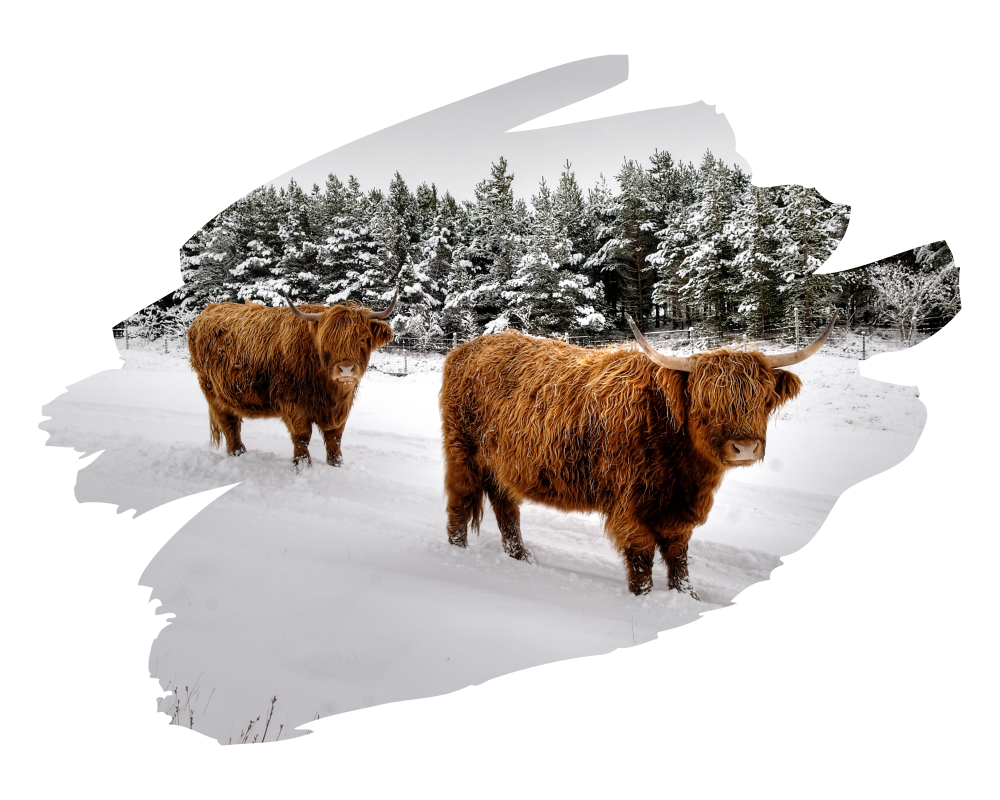
Snow in Scotland changes the entire mood of the land. It softens everything, then sharpens everything, then turns everything still. Roads fall quiet. Forests glitter. Deer wander through white fields like ghosts in the mist. Light bends and scatters, turning ridges gold at sunrise and violet at dusk.
You breathe differently here in winter. Slower. Deeper. More aware of the cold on your skin and the silence around you. Even the wind feels more dramatic, sweeping over the hills with a kind of wild authority.
It’s not just scenery, it’s atmosphere.
So, When Is the Best Time to Visit Scotland for Snow?
If you want extreme winter… this is your playground.
Ah, the million-pound question, and whilst not even the best supercomputer can predict how Scottish weather will behave on any given day,
The most reliable window is: January and February.
December snow is possible. March snow is likely in the mountains. But January and February dominate the season.
If your dream is snowy Scottish cities? Lower your hopes.
If your dream is snowy Scottish mountains? Raise them sky-high.
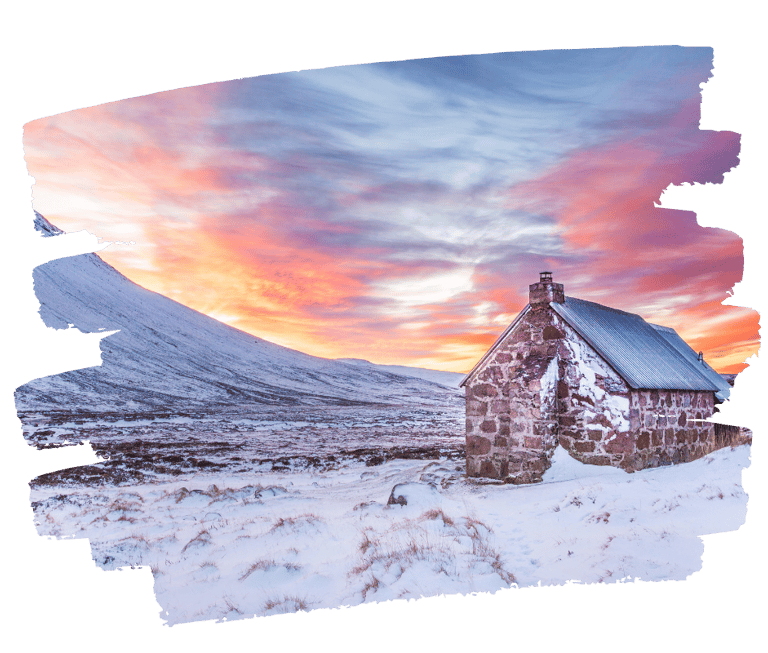
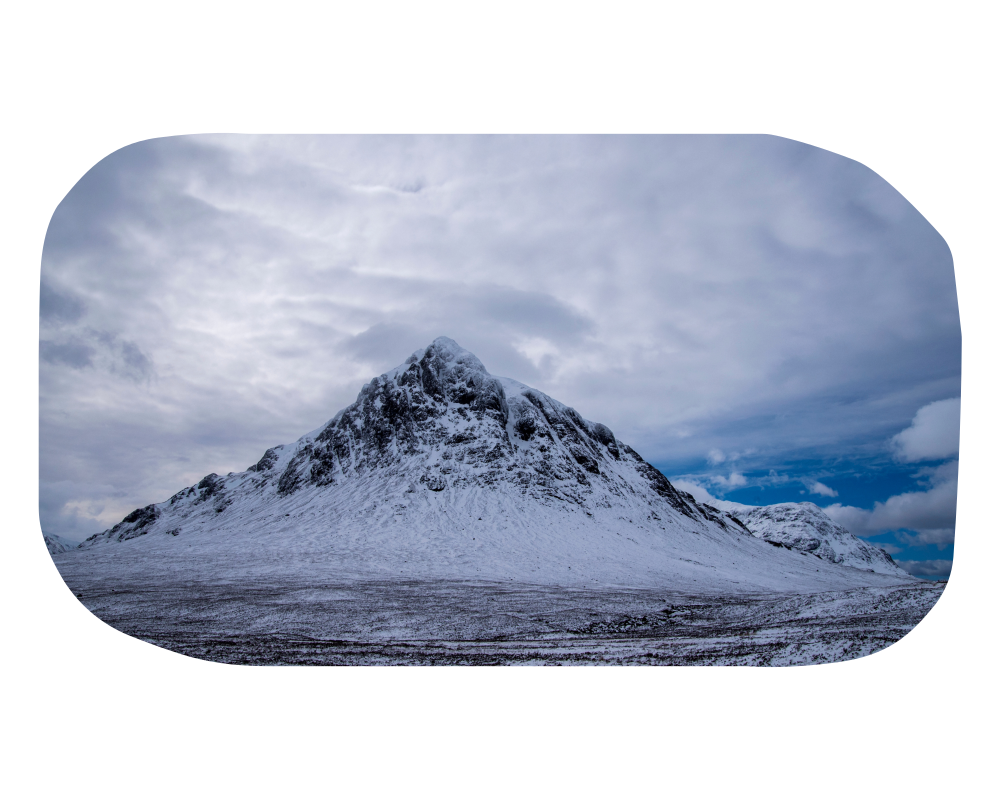
Driving into the glen in winter feels like entering a storybook written entirely in capital letters. The mountains close in around you. The ridges sharpen, shadows lengthen, and Buachaille Etive Mòr rises from the landscape like a giant frozen pyramid dusted in white. After snowfall, the Three Sisters look sculpted rather than grown, perfect, symmetrical, and heartbreakingly beautiful.
Swinging east, the Cairngorms spill their winter magic into two of Scotland’s most snow-reliable passes: The Lecht and Glenshee. Though smaller and gentler than Glencoe or Ben Nevis, these regions often surprise first-time visitors with just how snowy they become in the colder months.
The Lecht, sitting high in a natural bowl between Tomintoul and Strathdon, catches drifting snow like a cupped hand. When storms blow through from the north and east, the whole landscape becomes a smooth, white wave stretching toward the horizon. Its ski area is friendly, compact, and ideal for beginners or families dipping their toes into Scottish winter.
Get In Touch
info@thescottishtourguide.com
+44 (0)7769691551
© 2025 The Scottish Tour Guide