
Christmas in Scotland: Traditions, festivities & Snow
Christmas in Scotland: cosy traditions, twinkly markets, castle lights and the best snow spots, plus what to do, eat and see all winter
SCOTLAND WINTER TRAVELEVENTS & FESTIVALSSEASONAL GUIDES
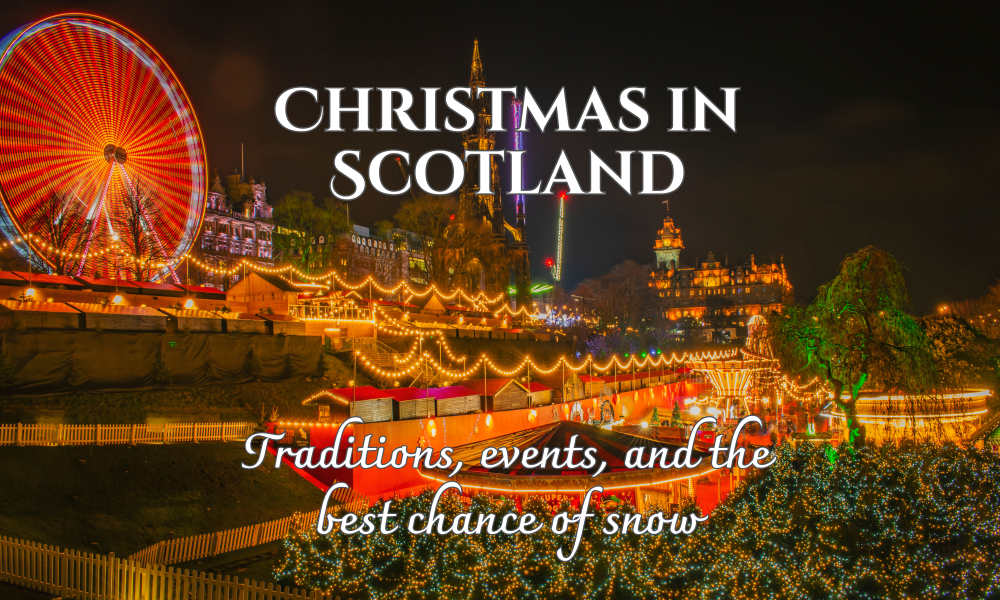
Christmas in Scotland is a bit like Scotland itself: beautiful, slightly dramatic, and prone to changing its mood every ten minutes. One minute you’re strolling past fairy lights with a hot chocolate, the next you’re being aggressively exfoliated by horizontal rain. Festive!
But if you’re visiting (or planning a wee winter break at home), Scotland at Christmas has a proper magic to it, stone streets glittering, castles lit up like they’ve been sponsored by the North Pole, and the kind of cold that makes a pub fire feel like a religious experience.
Let’s do this properly: traditions (the ones you’ll actually see), things to do (that don’t involve standing still in the wind), and where you’ve got the best odds of finding snow (spoiler: not on Princes Street at 2pm… usually).
A Scottish festive plot twist: we didn’t always do Christmas
Here’s the bit that surprises a lot of folk: for a long stretch of Scottish history, Christmas wasn’t the big public celebration it was elsewhere. After the Reformation, celebrations of “Yule” were discouraged, and for centuries Christmas Day was… well, more like “a normal working day but colder.” It wasn’t until 1958 that 25 December became a public holiday in Scotland. That’s why our winter celebrations leaned hard into Hogmanay (New Year) instead, because if you’re going to party, you may as well do it loudly, with tradition, and preferably involving fire.
Modern Scotland absolutely does Christmas now, trees, markets, carols, the lot, but the slightly different flavour of the season here has deep roots.
The National Trust for Scotland’s guide to Scottish Christmas traditions is a cracking read if you want the whole backstory with your mince pie.
Scottish Christmas traditions you’ll actually notice (and love)
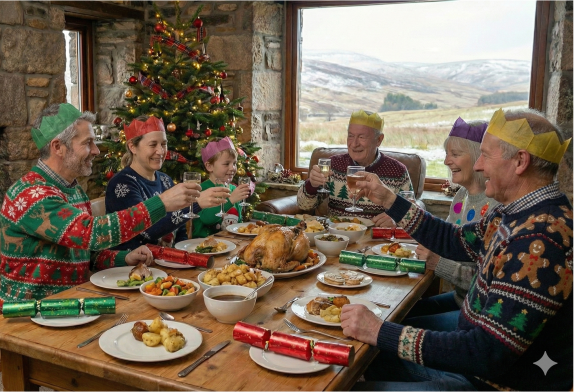
Christmas in Scotland tends to be cosy and home-centred. Think: fairy lights in windows, wreaths on doors, and enough food to feed a small village. You’ll hear the same debates in every kitchen:
Turkey or beef?
How many roast tatties is too many? (Trick question, there is no such thing as too many.)
Who’s going to fall asleep in front of the telly first? (It’s always the person who said they were “fine.”)
And then there’s the quiet, very Scottish genius of winter hospitality: if you’re cold, you get fed. If you’re still cold, you get tea. If you’re still cold after that, you get a whisky and sit closer to the fire until you start sweating profusely whilst politely pretending you’re enjoying it.
Even if you’re here for modern Christmas sparkle, Scotland’s older winter traditions still peek through. “Yule” isn’t just a word you see on gift tags; it’s connected to older midwinter celebrations that long predate Santa and shopping bags. This is why Scotland’s Christmas season can feel slightly… deeper. Like the landscape itself is part of the celebration.
And speaking of landscape…
Festive fact that’s pure Scotland: a 5,000-year-old winter light show
If you want one of those “tell me again why humans are amazing?” moments, head to Orkney. The Neolithic chambered cairn Maeshowe is famously aligned so that the setting winter sun shines directly down its passage around the solstice. It’s basically prehistoric mood lighting, no electricity, no tickets-and-QR-codes drama, just ancient engineering showing off.
That’s the kind of festive Scotland I’m talking about: twinkly lights are lovely, but Scotland has been doing winter atmosphere since before “atmosphere” was even a word.
Things to do at Christmas in Scotland (without turning into an icicle)
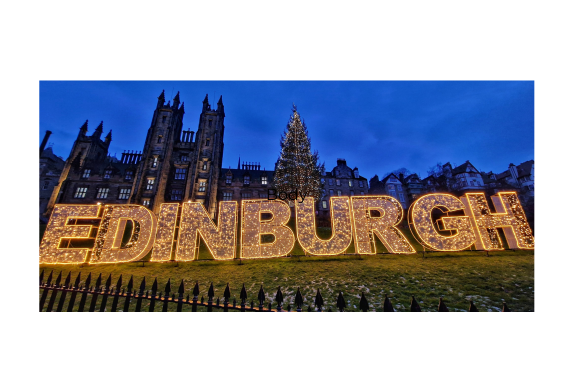
If you want instant Christmas vibes, Scotland’s cities go all-in—light trails, pop-up bars, seasonal food stalls, and the smell of cinnamon following you like a festive stalker. VisitScotland is a handy place to see what’s on around the country during winter.
In Edinburgh, two absolute crowd-pleasers:
Christmas at the Botanics (Royal Botanic Garden Edinburgh): an after-dark illuminated trail that’s genuinely gorgeous and very hard to photograph badly.
Castle of Light at Edinburgh Castle: the castle goes full dramatic with projections and storytelling after dark.
Glasgow also does Christmas with a bit more swagger, festive events, markets, great food, and plenty of warm places to hide when the weather starts acting up.
If you’re the kind of person who thinks “romantic” means “ruins, mist, and a moody loch,” Scotland in December is your love language. Winter is brilliant for castles and historic sites because the crowds are often smaller, the views are more dramatic, and you get that delicious feeling of having Scotland mostly to yourself (until you realise the wind has also come to keep you company).
And if you are driving but want a route that actually works with short daylight hours (and doesn’t rely on magical thinking), my itinerary planning service keeps it realistic and still brilliant.
Winter castles and historic days out (aka: Scotland showing off)
Boxing Day in Scotland: the great national exhale
Boxing Day (26 December) in Scotland is when the country collectively loosens its belt by two notches and pretends it’s “just a wee sandwich” while building a leftover tower that could have planning permission. It’s also traditionally associated with giving, historically linked to St Stephen’s Day and the idea of Christmas boxes: money, gifts, or leftovers set aside for workers, tradespeople, and those in need.
These days, you’ll see Boxing Day in Scotland split into three main camps: the cosy crowd (walk + pub + leftovers), the sporty lot (football fixtures are a classic), and the brave souls who treat the sales like a competitive event. It’s not as showy as Christmas Day, but it’s very Scottish in spirit: practical, hearty, and quietly determined to make the most of a day off.
Where to see snow in Scotland at Christmas (best odds, no guarantees)
Right. Snow. The thing everyone wants, and Scotland delivers… inconsistently, like a weather app with commitment issues.
Here’s the honest rule: if you want the best chance of snow, go higher. The Highlands and mountain areas are your safest bet. Cities can get snow, but it’s usually more “exciting flurry” than “full white Christmas postcard” at low level.
Best snow bets
The Cairngorms (around Aviemore and up onto the mountain): one of the strongest contenders for proper winter scenes.
Glenshee: high roads and often a good shout when winter properly kicks in.
Nevis Range (Fort William): dramatic scenery and the potential for snowy mountain views.
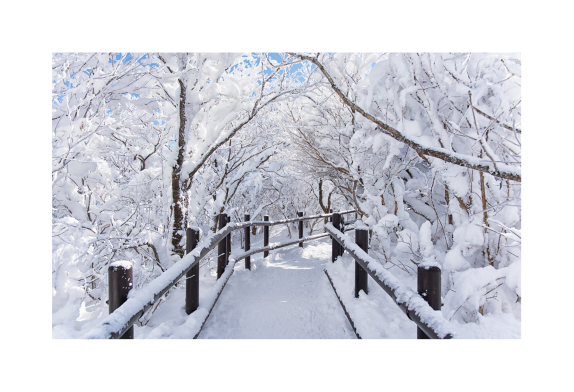
If you’re heading into mountain terrain in winter, hiking, photographing, or just being a bit too confident, check the Scottish Avalanche Information Service before you go. It’s clear, practical, and not afraid to tell you when an idea is daft.
A quick (but very important) safety note
A Christmas-in-Scotland day that actually works
Here’s the secret to enjoying Scotland in late December: plan around daylight. Scotland gets properly dark early, so do your scenic exploring in the morning and early afternoon, then save the evenings for lights, cosy dinners, and anything designed for after dark.
A perfect day looks like:
A short scenic drive and a winter walk while it’s light
A castle or historic stop (because Scotland)
A warm lunch somewhere that understands soup is a personality trait in winter
An evening light trail or festive city stroll
A pub fire finale (optional dram, highly recommended)
If you want ideas already stitched together, routes that make sense, places that feel festive without being mobbed, and stops that won’t have you driving twisty roads in the dark, feel free to get in touch.
Final thought: Scotland does Christmas with atmosphere, not perfection
Christmas in Scotland isn’t about flawless weather or ticking boxes. It’s about contrast: dark skies and bright lights, cold air and warm pubs, ancient stone and modern sparkle.
Come for the festive cities and cosy dinners, stay for the winter landscapes, the history, and the moments where Scotland looks like it’s showing off on purpose.

The older winter “Yule” vibes, hiding under the tinsel
Get In Touch
info@thescottishtourguide.com
+44 (0)7769691551
© 2025 The Scottish Tour Guide