
Hogmanay Hype: Why New Year in Scotland Is the Best in the World
Experience Hogmanay in Scotland with fire festivals, bonfires, first-footing and icy traditions. A witty local guide to the New Year done properly.
SEASONAL GUIDESEVENTS & FESTIVALSCULTURE & TRADITIONS
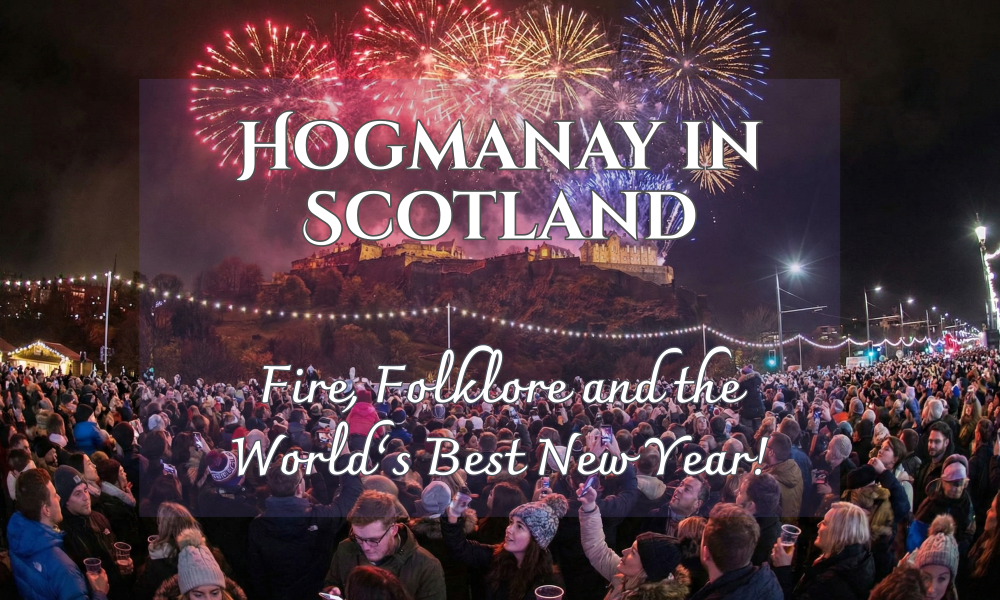
Let’s get something straight right away. In most countries, December 26th signals the slow, sad decline into January. Leftover turkey. Deflated decorations. A creeping sense of dread about emails.
In Scotland? That’s just the warm-up.
While the rest of the world is winding down, we’re lacing our boots, topping up the whisky, and preparing for a celebration so legendary it needed its own word. Hogmanay isn’t just New Year’s Eve, it’s a national endurance event with fireworks, folklore, fire, freezing water, and at least one poor soul loudly insisting they’re “absolutely fine”.
And as a Scottish tour guide, I’ve watched countless visitors arrive expecting a quiet winter escape… only to find themselves arm-in-arm with strangers at midnight, shouting lyrics they don’t fully know, and seriously questioning why they just agreed to jump into the sea the following morning.
To understand why Hogmanay still feels bigger, warmer, and louder than New Year anywhere else, you need to know why it matters so much here in the first place.
What Is Hogmanay? Scotland’s Legendary New Year Explained
Hogmanay isn’t a fancy rebrand of New Year’s Eve. It’s woven into the fabric of Scottish life, partly because, for nearly 400 years, Christmas in Scotland was banned. Yes. Banned. No presents. No turkey. No Boxing Day naps.
So Scots did what we do best: redirected all that festive energy into the New Year instead.
Add to that a dash of Viking influence, winter solstice celebrations, fire rituals, and a general enthusiasm for surviving the darkest time of year, and you’ve got the foundations of Hogmanay. The result? A celebration that’s less about resolutions and more about community, continuity, and seeing out the old year with enough noise to scare off anything unpleasant.
Why Scotland Takes New Year So Seriously
Scotland’s obsession with the New Year isn’t just about loving a party (though that certainly helps). For centuries, Christmas barely registered here at all. Following the Reformation, it was effectively banned, no public holiday, no big celebrations, just another working day with better intentions.
So Scots did what Scots do best: adapted. All the festive energy, generosity, and need for connection got funnelled into the New Year instead.
Hogmanay became the moment to gather family, visit neighbours, settle debts, clean the house, and start again properly. In a country shaped by long winters, hard weather, and communities that relied on each other to get through them, New Year wasn’t just symbolic; it mattered. Hogmanay was about survival, solidarity, and hope, wrapped up in song, whisky, and the firm belief that whatever the year ahead brings, we’ll face it together.
That sense of renewal didn’t appear out of nowhere; it’s rooted in traditions far older than fireworks and street parties.
Ancient Roots: Vikings, Winter Solstice & Fire Traditions
Long before fireworks and street parties, midwinter in Scotland was about light, survival, and seeing off the darkness.
Many of Hogmanay’s traditions trace their roots back to Norse settlers, who brought with them winter solstice celebrations marking the turning of the year and the slow return of the sun. Fire played a central role, not just for warmth, but as a symbol of cleansing and renewal, burning away bad spirits and misfortune before welcoming fresh beginnings.
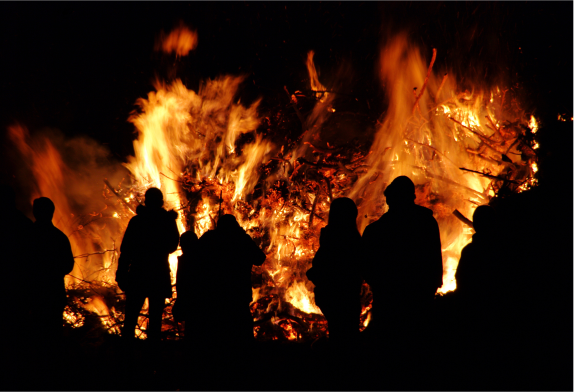
Over time, these pagan rituals blended with local customs, evolving into the bonfires, torchlit processions, and dramatic fire ceremonies still seen across Scotland today. When you watch flames cutting through the dark on Hogmanay night, you’re not just seeing a show; you’re witnessing echoes of ancient beliefs that helped people endure long winters and start the year with hope, courage, and a healthy respect for the power of fire.
Over centuries, those ancient beliefs filtered into everyday customs, the kind that still shape how Hogmanay is celebrated today.
How to Celebrate Hogmanay Like a Local
Celebrating Hogmanay like a local isn’t about buying a ticket or memorising a schedule; it’s about understanding the small rituals that carry big meaning.
While the fireworks and street parties get the headlines, the real heart of a Scottish New Year happens in homes, doorways, and shared moments with friends, family, and sometimes complete strangers. These customs aren’t performances; they’re habits passed down through generations, quietly shaping how the year begins.
Get these right, and you won’t just be watching Hogmanay, you’ll be part of it. And it all starts with who crosses your threshold after midnight.
First-Footing: Scotland’s Most Important New Year Tradition
Once the bells have rung and everyone’s finished shouting “Happy New Year!” at varying volumes, Hogmanay turns serious. First-footing is the belief that the first person to cross your threshold after midnight sets the luck for the entire year ahead; no pressure. Folklore favours a tall, dark-haired man, a leftover suspicion from Viking times when fair-haired strangers tended to arrive with torches and bad intentions.
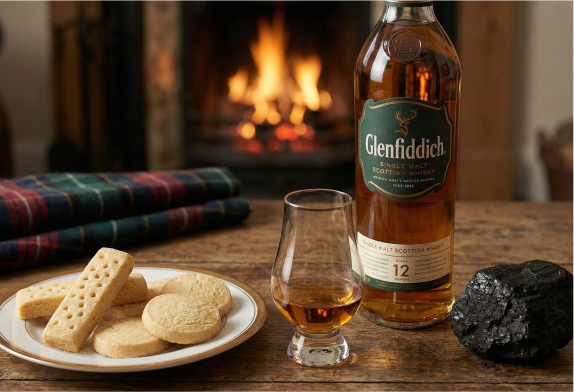
The first-footer should also bring gifts:
Coal for warmth
Shortbread or black bun for food
Whisky for… well, survival
Turning up empty-handed is considered bad form, bad luck, and a solid reason not to be invited back next year. Get these right, and you won’t just be watching Hogmanay, you’ll be part of it. And it all begins with who steps through the door first.
Redding the House: Sweeping Out the Old Year
Before the bells ring and anyone’s allowed near the whisky, Hogmanay insists on a ritual known as redding the house. This isn’t just a tidy-up, it’s a full symbolic eviction of the old year and all its bad luck. In folklore, any dirt, clutter, or unpaid business left behind could follow you straight into January, so floors were swept, ashes cleared from the hearth, and doors flung open to let the past make a dignified exit.
These days, it tends to involve a panicked clean of the visible areas and a collective agreement not to open that cupboard. The idea remains the same, though: start the New Year with a clean slate, clear energy, and the comforting belief that if anything goes wrong next year, it definitely isn’t the house’s fault.
Auld Lang Syne: The Song Everyone Knows (sort of)
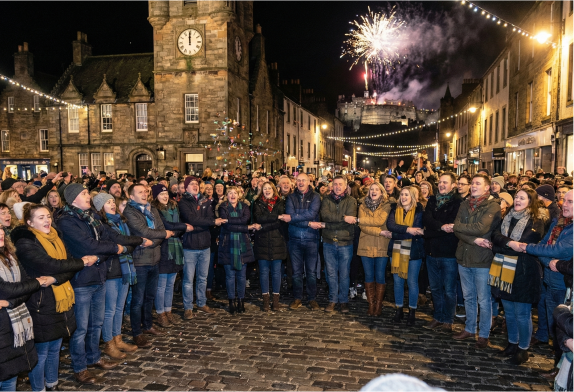
No Hogmanay is complete without a heartfelt attempt at Auld Lang Syne, written by Scotland’s national bard, Robert Burns. Traditionally sung at the stroke of midnight, the song is about friendship, shared memories, and not forgetting those who’ve walked beside us through the years.
Folklore says singing it together seals bonds for the year ahead, which explains why complete strangers suddenly feel like lifelong pals by the final chorus. The unspoken rule is simple: hold hands in a circle, don’t cross arms until the last verse, and when the tempo lifts, charge into the middle like you know exactly what you’re doing.
Words are optional. Enthusiasm is not.
What NOT to Do at Hogmanay (If You Value Your Luck)
Scottish New Year folklore is very clear on one thing: don’t tempt fate!
Taking rubbish out of the house on New Year’s Day is said to throw your luck away with it, so the bins wait until January 2nd, whether you like it or not. Borrowing items or lending money is also frowned upon; you don’t want to start the year in debt, financial or otherwise.
And while opening the door at midnight to let the old year out is encouraged, slamming it shut too quickly is not. Tradition says you should give the New Year time to settle in properly, ideally with a dram in hand and someone singing slightly off-key in the background.
Once the home rituals are done and the whisky’s flowing, Hogmanay spills out into the streets, and that’s where things really get interesting.
Where to Celebrate Hogmanay in Scotland
Scotland doesn’t do New Year quietly. Whether you want fireworks over a medieval skyline or to stand far too close to something that’s very much on fire, there’s a Hogmanay celebration with your name on it.
Hogmanay in Edinburgh: Fireworks, Street Parties & Big Atmosphere
There’s no avoiding it, Edinburgh’s Hogmanay is famous for a reason. The capital goes all-in with torchlight processions, live music, street parties, and a midnight fireworks display exploding over the castle like Scotland is showing off (which, frankly, it is).
It’s big, bold, and brilliantly chaotic. The official street party is ticketed and packed, but locals often opt for a cosier Old Town pub or a walk up Calton Hill to watch the fireworks without being crushed by someone in a novelty hat.
If you’re visiting in winter and want help navigating the madness, or escaping it, planning ahead makes all the difference. A tailored route or private guide lets you experience the atmosphere without spending the night wondering where you are or why your feet have gone numb.
The Biggar Bonfire: One of Scotland’s Oldest Hogmanay Traditions
Biggar proves you don’t need fireworks or fanfare to mark the New Year, just a truly unreasonable bonfire and a collective sense of “aye, this’ll do”.
This South Lanarkshire town hosts one of Scotland’s oldest Hogmanay traditions, and it’s gloriously straightforward. A massive bonfire right in the middle of the town is lit early in the evening, flames roaring skyward as locals and visitors gather round to see out the old year. No tickets. No barriers. No slick production. Just fire, folklore, and the shared belief that if you burn the bad stuff hard enough, the new year has no choice but to behave.
Historically, fire was believed to cleanse and protect, driving away evil spirits and ensuring good fortune. Standing by the Biggar Bonfire, feeling the heat on your face while the year turns, it’s easy to see why this tradition has survived. It’s ancient, elemental, and wonderfully unpolished, Hogmanay stripped back to its fiery core.
Stonehaven Fireballs: Scotland’s Most Spectacular New Year Ritual
If Biggar is about communal warmth, Stonehaven is about controlled chaos.
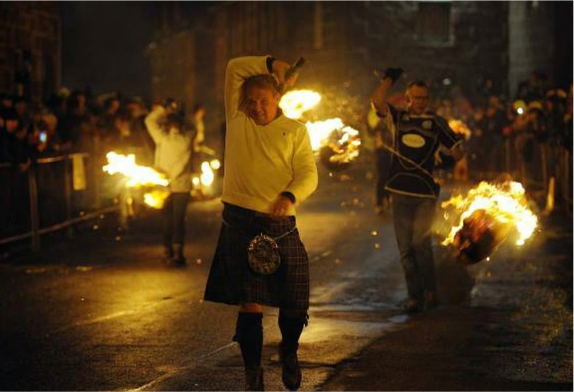
The Stonehaven Fireball Ceremony is one of Scotland’s most visually arresting Hogmanay traditions, and it goes far beyond spectacle. At midnight, a select group of locals swing massive wire cages filled with burning tar and rags above their heads as they march through the streets. Sparks fly. The crowd gasps. Phones tremble.
Each fireball represents the sun, a powerful symbol rooted in ancient pagan belief. By swinging the flames and then casting them into the sea, participants are said to destroy the old year’s misfortune and welcome the light back after the darkest days of winter. It’s ritual, symbolism, and sheer nerve rolled into one.
Only locals can take part, and it’s taken very seriously. The fireball swingers train, prepare their equipment, and carry on a tradition passed down through generations. Watching it feels like stepping into something ancient, a reminder that Hogmanay isn’t just a party, it’s a survival celebration born of long winters and stubborn optimism.
The Loony Dook: Cold Water, Clean Slate & Questionable Decisions
Then there’s the Loony Dook. Because apparently, fire alone wasn’t enough.
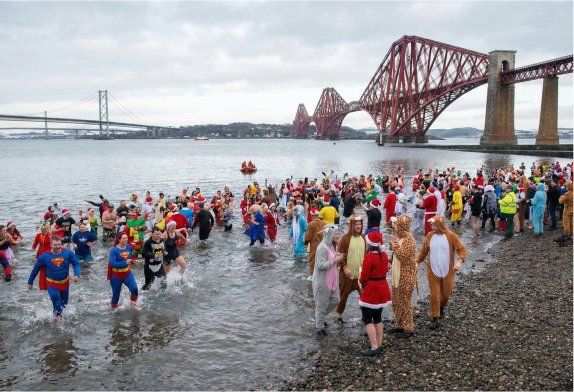
Held traditionally on New Year’s Day near South Queensferry, the Loony Dook involves plunging into the freezing waters of the Firth of Forth, often in fancy dress, because dignity has already left the building.
The origins are surprisingly recent, beginning as a small dare between friends in the 1980s. But it tapped into something much older: the belief that cold water cleanses both body and spirit. A shock to the system, a fresh start, a literal wash of the old year away.
Today, while the official event has evolved, the tradition lives on across Scotland. From Portobello to Highland lochs, brave souls continue the ritual every January 1st. Is it sensible? Absolutely not. Does it work? Ask anyone who’s done it, and they’ll tell you they’ve never felt more alive (or more awake).
Participation is optional. Spectating with a hot drink and all your clothes firmly on is equally valid.
Will It Snow at Hogmanay? Where to See Snow in Scotland at New Year
The honest answer? Maybe… and that’s very on brand for Scotland.
In cities like Edinburgh and Glasgow, Hogmanay usually comes with cold air, dramatic skies, and a healthy chance of rain rather than postcard-perfect snow. We call it dreich, a sort of damp grey mood that makes pubs feel cosier and whisky taste better. If you’re determined to find snow, your best bet is to head north and up. The Cairngorms regularly deliver winter scenes worthy of a Christmas card, especially around Aviemore, while places like Glencoe often keep their peaks dusted white even when the roads are clear.
Just remember: winter weather here doesn’t play by the rules, and half the magic is not knowing what you’re going to get until you step outside. Snow or no snow, Hogmanay has never depended on perfect conditions, and that’s exactly why it works.
Whether you greet January soaked, singed, or serenaded by bagpipes, one question always comes next…
Why Hogmanay Is the Best Way to End the Year
Hogmanay isn’t about counting down to midnight and calling it a night; it’s about closing the year properly.
In Scotland, New Year is a shared moment, rooted in tradition and community, where strangers shake hands, doors are opened, and everyone agrees to start again together. There’s something quietly powerful about that, especially in the middle of winter.
Whether you’re standing beneath fireworks, warming your hands by a bonfire, or singing Auld Lang Syne with people you met five minutes ago, Hogmanay has a way of reminding you that the year doesn’t end alone. It ends with laughter, noise, and the comforting belief that whatever comes next, you’ll face it with others.
And once you’ve experienced it, it’s hard not to start planning the next one.
Planning a Hogmanay Trip to Scotland
If you’re thinking of experiencing Hogmanay for yourself, a bit of planning goes a long way, especially if you want more than just a night out. Accommodation books up early, transport runs on festive logic rather than timetables, and some of the best experiences happen well away from the main crowds. Many visitors choose to build Hogmanay into a wider winter trip, combining New Year celebrations with snow-dusted landscapes, quiet villages, and cosy pubs where the fire’s always on.
Whether you want the full street-party experience or something slower and more traditional, Scotland in late December rewards those who plan ahead and welcomes everyone who turns up with an open mind and a decent coat.
Get In Touch
info@thescottishtourguide.com
+44 (0)7769691551
© 2025 The Scottish Tour Guide